
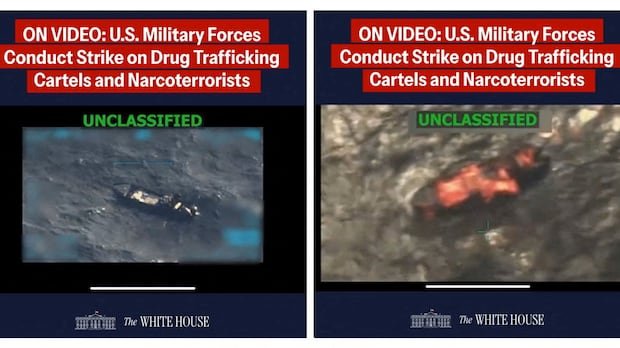

U.S. President Donald Trump acknowledged a military operation targeting a suspected “drug-carrying submarine” in the Caribbean. The strike reportedly resulted in the deaths of two individuals, with two survivors being held aboard a navy vessel. During a meeting with Ukrainian President Volodymyr Zelenskyy at the White House, Trump mentioned the submarine was designed for transporting large quantities of drugs but did not provide details on casualties. Secretary of State Marco Rubio confirmed the existence of survivors but stated that more information would be provided later.
According to Reuters, sources revealed the presence of two survivors from the strike, hinting at the potential captivity of individuals in what Trump deems a conflict against a “narcoterrorist” threat linked to Venezuela. The Pentagon has not issued an official statement regarding the incident.
Before this operation, previous U.S. military actions against suspected drug vessels near Venezuela had not resulted in survivors. The strikes, initiated in early September, were showcased through videos depicting vessel destruction, yet no information regarding the vessel occupants or cargo has been publicly disclosed by the administration.
Speculations suggest that the targeted submarine may have been a semi-submersible vessel, commonly used by drug traffickers to evade detection. Reports indicate that a helicopter rescue mission was conducted to retrieve the survivors and transport them back to a U.S. warship.
The Trump administration has faced criticism over the legality of these strikes, particularly after disclosing authorization for covert CIA operations within Venezuela. The escalating tensions with Venezuela have led to concerns about potential confrontations, as evident from the early resignation announcement of Adm. Alvin Holsey, the commander of U.S. military forces in Latin America. Democratic Senator Jack Reed expressed unease over Holsey’s departure, raising questions about the administration’s military strategies in the region.
Amidst these developments, the U.S. military’s decision to assign the II Marine Expeditionary Force, based in North Carolina, to lead counter-narcotics operations instead of the Southern Command has surprised many observers, as combatant commands typically oversee such high-profile missions.