
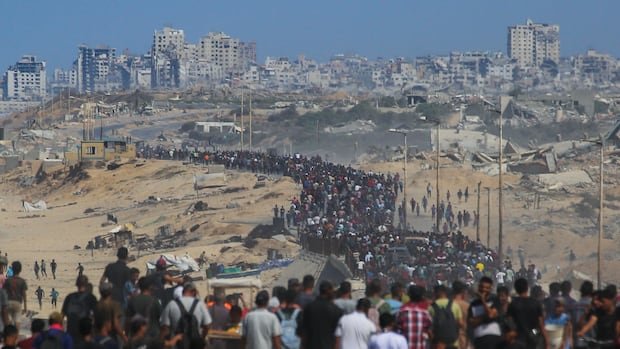

The recent cessation of airstrikes has led to the release of surviving Israeli hostages and the return of hundreds of Palestinians from Israeli prisons. The future of Donald Trump’s Middle East deal remains uncertain, with moments suggesting it could unravel despite efforts to achieve a tentative peace in a region plagued by enduring conflicts.
Although Trump hailed the ceasefire as a historic milestone, it is crucial to note that it only marks a temporary pause in the long-standing Gaza war, which is part of a complex and unresolved decades-old dispute. The agreement primarily reflects a form of “negative peace,” signifying the absence of violence without addressing the root causes of the conflict comprehensively.
During his recent visit to the region, Trump briefly acknowledged the deep-seated divisions in the Middle East, emphasizing a rare opportunity to move past historical animosities. However, the deal lacks a clear roadmap for a lasting resolution between Israelis and Palestinians, notably omitting a definitive stance on a two-state solution, which has been a cornerstone of previous U.S. administrations’ approaches.
While Trump highlighted accomplishments like Israel’s actions against Hezbollah and Iran and the Abraham Accords, which normalized relations between Israel and four regional countries, the deal falls short in outlining concrete steps towards sustainable peace. The absence of a detailed plan for a negotiated settlement raises questions about the feasibility of achieving lasting reconciliation in the region.
The sidelining of the two-state solution in Trump’s proposal diverges from the traditional U.S. stance on the conflict, placing the country at odds with global leaders who advocate for a two-state resolution. Despite mentioning the potential for Palestinian self-determination in the future, the deal lacks a robust framework for realizing this aspiration.
Moving forward, the path to lasting peace in the Middle East demands concerted efforts from all parties, facilitated by impartial mediators and sustained diplomatic engagement. Achieving a transformative “positive peace” akin to the Good Friday Agreement in Northern Ireland requires a commitment to dialogue, compromise, and addressing deep-rooted grievances.
As the region navigates the aftermath of the Gaza ceasefire, the journey towards stability and peace remains arduous. While the recent agreement marks a crucial initial step, it underscores the ongoing challenges in fostering enduring peace in a region marred by protracted conflicts and unresolved tensions.