
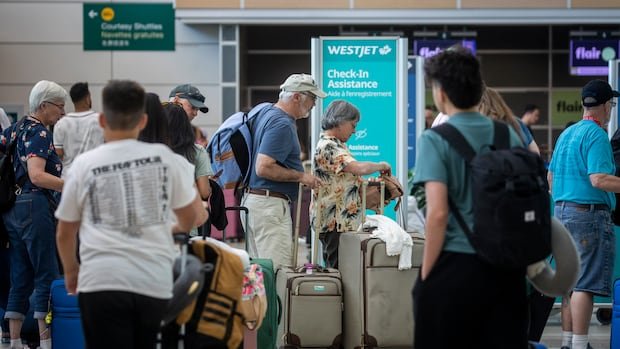

WestJet’s flight attendants are gearing up for a potential strike as early as Sunday if negotiations fail to produce an agreement by then, causing concern among passengers. The Canadian Union of Public Employees (CUPE), representing 4,400 WestJet flight attendants, issued a 72-hour strike notice on Thursday morning. In response, WestJet issued a corresponding 72-hour lockout notice.
While the strike notice does not automatically lead to a walkout, a union spokesperson indicated significant differences between the two parties on key issues. Passengers like Ken Wallin are anxious about potential flight disruptions. Wallin and his wife have plans to travel to Ireland for their 29th wedding anniversary on Monday, a trip they have been eagerly anticipating after cancelling their previous vacation due to the pandemic.
For Wallin, the prospect of another cancelled vacation is disheartening, given months of planning and anticipation. Despite looking into alternative airline options, direct flights at reasonable prices have been elusive. Although WestJet is offering passengers with bookings between July 30 and Aug. 4 the flexibility to switch or cancel without fees, Wallin’s situation only allows for a travel credit, which is not ideal for him as an infrequent flyer.
In a similar predicament, traveler Armin Ataee had to rebook his return flight from Edmonton to Vancouver with another airline to meet his conference schedule, incurring additional costs. While Ataee acknowledged the value of the credit, he expressed frustration over the inability to receive a cash refund.
WestJet has reiterated that certain passengers can rebook or cancel flights without charges, with PremiumFlex and BusinessFlex ticket holders eligible for cash refunds. Others will receive travel credits instead. Travel expert T.J. Dunn highlighted the limitations of being restricted to using the credit for future WestJet bookings.
Passengers who booked through third-party agencies must coordinate changes directly with the agency. Dunn emphasized that if WestJet cancels flights, the airline is responsible for rebooking passengers on alternative carriers, though this process may be challenging during peak travel periods.
As negotiations intensify with strike and lockout notices in place, the pressure is on both sides to find a resolution. Barry Eidlin, a labor scholar, noted that such pressure can often lead to breakthroughs in negotiations. The primary sticking point revolves around fair pay, with flight attendants citing unpaid hours under WestJet’s credit hour system. WestJet argues that the system is industry standard and compensates attendants for additional duties during what they consider unpaid time.
The dispute mirrors past conflicts in the aviation industry, such as Air Canada’s flight attendant strike, where public support played a crucial role in reaching a favorable agreement. The hope for CUPE in the WestJet case is to garner similar support to address the pay structure issue.