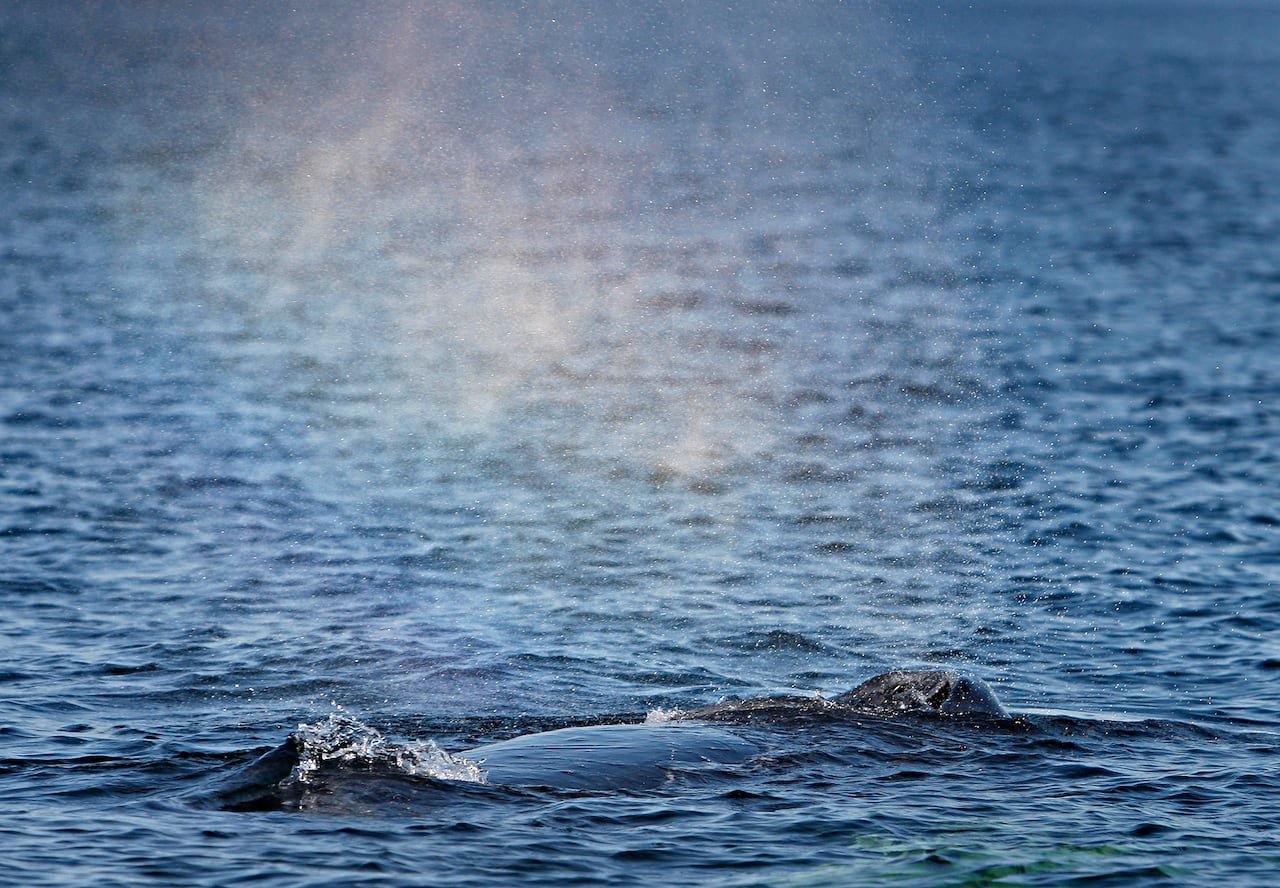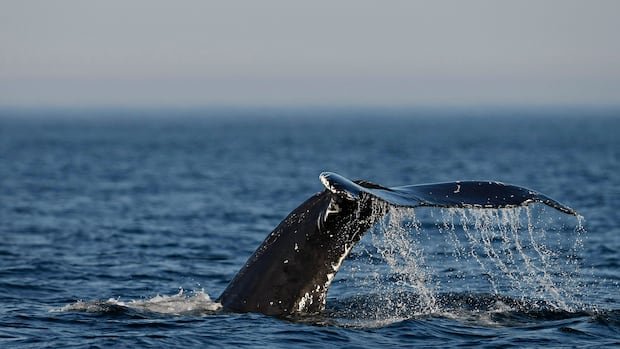

Recent Canadian research indicates that the diets of certain baleen whales are changing as the Gulf of St. Lawrence waters warm up. The shift in diets is attributed to a transformation in available prey.
Lead researcher Charlotte Tessier-Larivière from Université du Québec à Rimouski highlighted the decline of Arctic krill, a significant food source for fin whales in the 1990s. According to her latest findings, fin and minke whales are now inclining towards consuming more forage fish such as capelin, mackerel, and herring, which are the primary diet of humpback whales in the region.
Tessier-Larivière explained that their study demonstrates the whales’ ability to adjust their diet based on the availability of preferred prey, showcasing a positive adaptive capacity. However, the full extent of their adaptability remains unknown.
This dietary shift raises concerns about potential competition as all three whale species are now consuming similar types of fish. The question arises: Will there be enough prey for all, and what consequences might arise if these prey species decrease?
Oceana campaigner Hanna Vatcher finds the study’s results both encouraging and distressing. She emphasized that the observed changes in whale behavior in response to shifting ocean conditions due to climate change indicate a significant impact on marine life, from large whales to small forage fish.
The research methodology involved sampling tissues from each whale species and their prey during summer months over a span of 28 years. Analysis of carbon and nitrogen isotopes in the samples provided insights into the whales’ dietary patterns.
In the later years of the study, an increase in forage fish signatures was observed in the tissues of all three whale species. These forage fish are considered crucial elements in the local food web, forming the foundation of the ecosystems.
Despite consuming similar food sources, the study revealed that fin, minke, and humpback whales were not competing for resources but rather exhibited “resource partitioning” to cope with limited supplies. This behavior suggests that the whales might be targeting different fish species, possibly in varied locations or time frames.
Janie Wray, CEO of BC Whales and North Coast Cetacean Society, emphasized the whales’ intelligence and adaptability in adjusting their feeding habits to changing conditions. She cited instances of cooperative feeding behaviors among humpback and fin whales, showcasing their ability to adapt and thrive.