
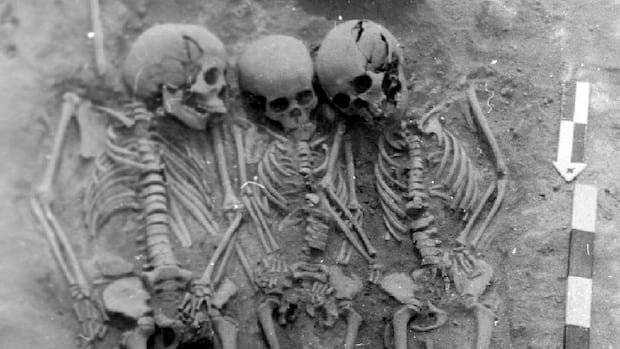

Scientists have unraveled a long-standing enigma surrounding the burial of numerous deceased children by hunter-gatherers in Russia 5,500 years ago. The mystery was unveiled as the earliest known occurrence of the plague, shedding light on the disease in a groundbreaking study published in Nature by an international team of scientists, including researchers from Canada.
The study revealed that Yersinia pestis, the bacterium infamous for causing the Black Death in Europe during the 14th century, was already lethal to humans millennia earlier. Moreover, it had the ability to spread within hunter-gatherer societies, not solely limited to densely populated settlements that emerged later.
Lead author of the study, Ruairidh Macleod, a postdoctoral researcher at Oxford University, expressed astonishment at the early evidence of widespread fatal plague outbreaks among these ancient communities. The research was conducted by Andrzej Weber, an anthropology professor at the University of Alberta, and Angela Lieverse, an archaeology professor at the University of Saskatchewan, who have been investigating remains from a prehistoric hunter-gatherer settlement near Lake Baikal in Russia for an extended period.
Lieverse, specializing in studying human bones, identified that a significant proportion of individuals buried at the archaeological site were children under 12 years old, a peculiar observation with no prior explanation. Collaborating with various scientists, including Macleod, the team discovered traces of the plague bacterium in the remains, sparking crucial insights into the ancient outbreak.
The strain of plague found in the study was particularly lethal to children due to a genetic feature triggering severe inflammatory complications, akin to Kawasaki syndrome. Surprisingly, this strain lacked the genes necessary for the bubonic plague to spread through fleas.
The research indicated that the Lake Baikal outbreak involved multiple family groups, hinting at human-to-human transmission. Tragic cases, such as the simultaneous deaths of three young girls who were sisters and cousins, highlighted the devastating impact of the outbreak on these ancient communities.
Understanding the evolution and impact of deadly pathogens like the plague over time is crucial for anticipating future threats. Lieverse emphasized the poignant narrative revealed by the prehistoric remains, underscoring the importance of recounting the stories of those affected by such ancient tragedies.