
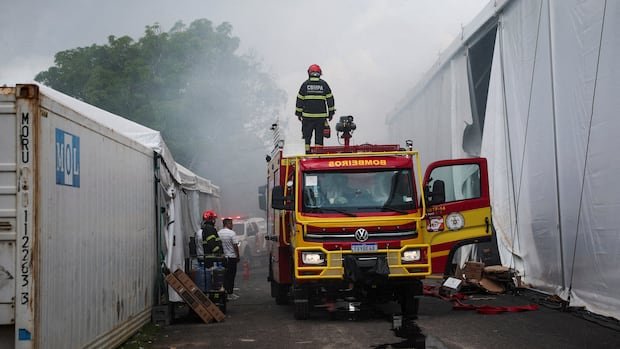

A fire incident disrupted the United Nations climate talks in Brazil, leading to evacuations and a delay in negotiations. The fire occurred in an area where sideline events take place during the annual talks, known as COP30. Although quickly controlled, the entire site was evacuated for safety checks, impacting the resumption of conference activities.
Thirteen individuals received treatment for smoke inhalation due to the fire. The disruption could significantly affect the conference timeline, potentially extending negotiations into the scheduled final day on Friday. Plans to have ministers and diplomats work late were disrupted, raising the possibility of only top negotiators convening for a condensed session.
The fire interrupted critical discussions on contentious topics, including financial matters, reducing fossil fuel emissions, and trade policies. Negotiators had aimed to finalize an agreement on these interconnected issues before the incident occurred. However, the delay posed challenges in bridging existing gaps and meeting the conference’s deadlines.
Veteran climate observers expressed concerns over the impact of the fire on negotiations, emphasizing the pressing need to address substantial differences within a limited timeframe. Despite the setback, some viewed the community response during the emergency as a demonstration of unity crucial for climate action.
UN Secretary General António Guterres urged countries to show flexibility and compromise in reaching agreements, recognizing the urgency of the situation. He emphasized the global significance of the talks in Belem and called for sincere engagement during the remaining scheduled days.
Key issues at the conference included detailed plans for phasing out fossil fuels and increasing financial support for vulnerable countries grappling with climate-related challenges. Calls to triple adaptation finance to $120 billion per year underscored the need for concrete actions to combat climate change.
The incident highlighted the need for decisive action and collaboration among nations to address climate challenges effectively. As negotiations continue, the focus remains on finding common ground and delivering tangible outcomes to combat the climate crisis.