
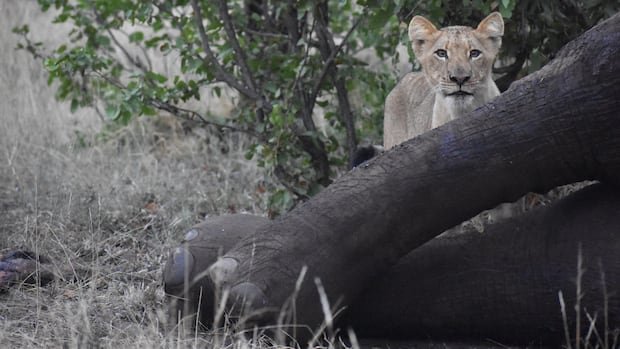


In the vast plains of the African savannah, elephants are reshaping the ecosystem even in death.
A recent study conducted by an international research team investigated the impact of elephant carcasses in South Africa’s Kruger National Park.
Known as “ecosystem engineers,” elephants play a crucial role in the savannah by altering the landscape during their lifetime through various activities. However, the study aimed to explore whether these effects persist post-mortem.
Lead author Courtney Reed explained that elephant carcasses are rich in nutrients like carbon, nitrogen, and phosphorus, posing the question of whether these nutrients continue to impact the ecosystem post-decomposition.
Through analyzing soil chemistry and biodiversity around elephant remains, the researchers discovered that decomposition led to the release of significant nutrient pools, enhancing soil microbial activity and promoting the growth of nutrient-rich plants that attracted herbivores over an extended period.
The study revealed that the effects of decomposition from elephant carcasses can last for more than seven years, although initially, the high nutrient concentration may inhibit vegetation growth, creating “cold spots” in biodiversity.
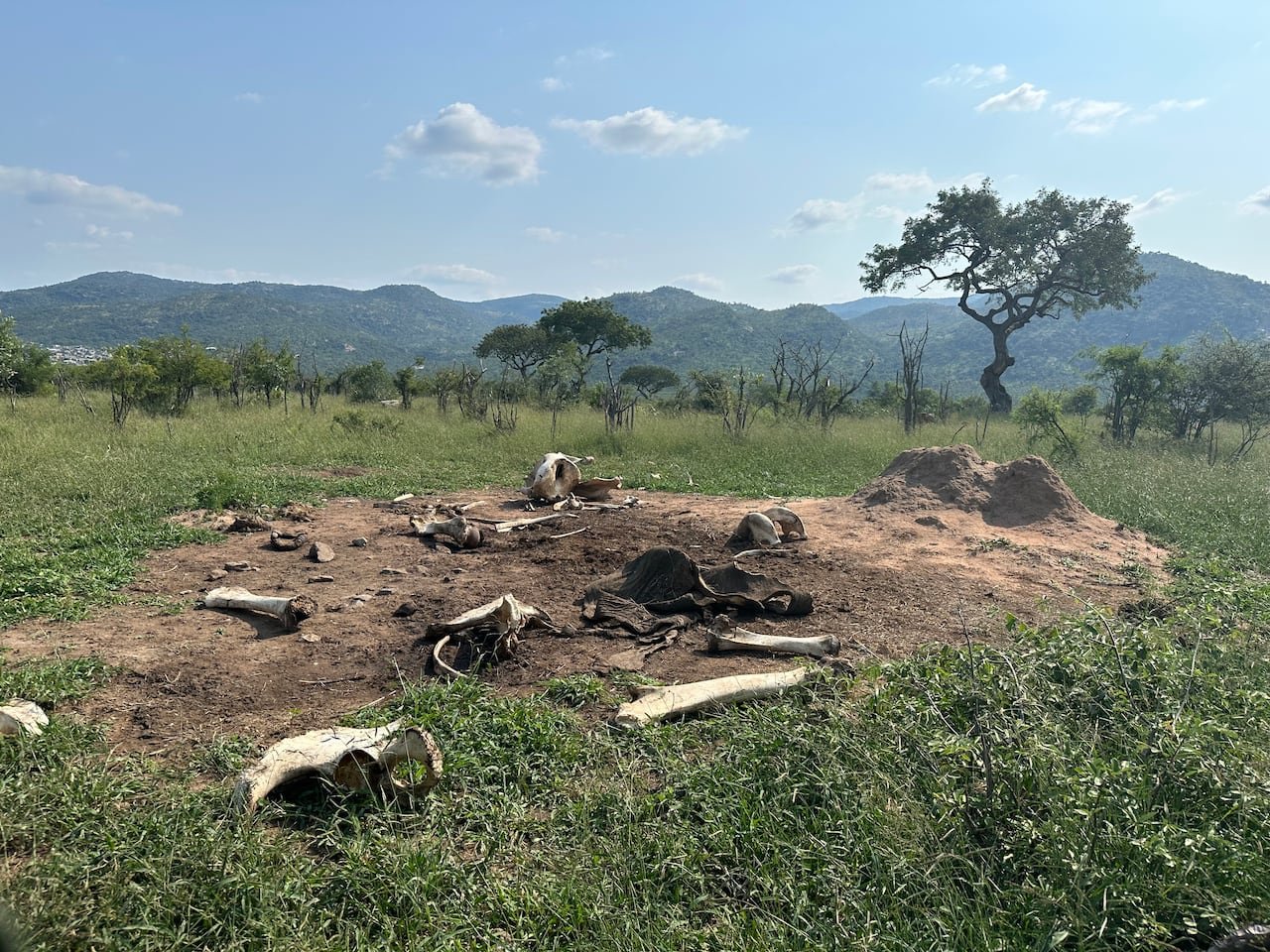
Research indicates that the initial high nutrient concentration from elephant carcasses can impede vegetation growth, resulting in barren patches, affecting biodiversity. (Submitted by Courtney Reed)
However, as the ecosystem stabilizes, excess nutrients dissipate, promoting vegetation growth by converting ammonium into nitrate, a more plant-friendly nitrogen form.
Reed noted that the returning vegetation is nitrogen-rich, serving as a vital protein source for herbivores like zebras, buffaloes, and rhinos.</p