
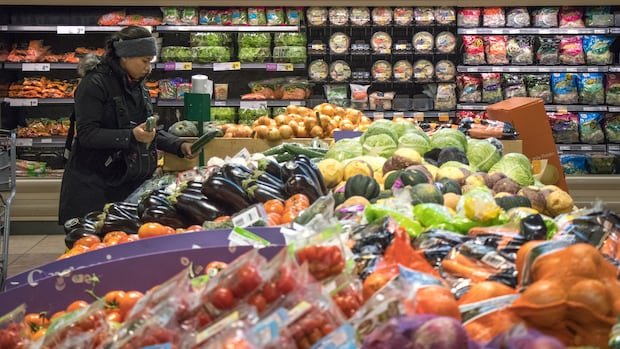

A recent survey on Canadians’ views on food affordability and shopping behaviors reveals that consumers are adjusting their shopping, cooking, and eating habits in response to increasing prices.
The Canadian Food Sentiment Index, a report by Dalhousie University’s Agri-Food Analytics Lab and Caddle, highlights that food expenses remain a primary financial concern for households in Canada. While slightly fewer respondents (over 80%) identified food as their top expense pressure compared to a year ago, it still outweighs concerns like utilities, household items, housing, transportation, and entertainment.
Regarding food costs, half of the survey participants noted a significant increase over the past year, with around 12% reporting no change. Approximately 20% of Canadians now spend more than $600 monthly on groceries, a slight rise from the previous survey, while nearly half spend between $300 and $600 each month.
Statistics Canada reported a 3.4% rise in grocery prices in October, slightly lower than the previous month. While fresh vegetable prices declined, increases in fresh and frozen chicken prices balanced the overall decrease. Grocery costs outpaced the general inflation rate for the month.
In response to food price inflation, almost half of the respondents have altered their grocery habits by seeking discounts and sales. Some have resorted to using coupons, shopping online for better deals, or opting for cheaper stores.
To manage higher expenses, many Canadians are cutting back on restaurant and takeout spending. About one-third spend less than $50 monthly on restaurant food, and nearly a quarter spend between $51 and $100.
The study also highlighted a decline in trust towards major food retailers among Canadians. There is a growing desire for transparency in pricing mechanisms, along with an increasing preference for Canadian-grown and made products.
Report co-author Stacey Taylor emphasized that consumers are adapting by making trade-offs such as switching brands, reducing variety, and cooking more at home. The study suggests that affordability is now a primary consideration for most food-related decisions, reflecting deeper concerns about fairness and transparency in the food economy.
The renewed enthusiasm for Canadian-made products is seen as a positive development, with many households viewing buying local as a means to support farmers, domestic processors, and enhance Canada’s food sovereignty.