
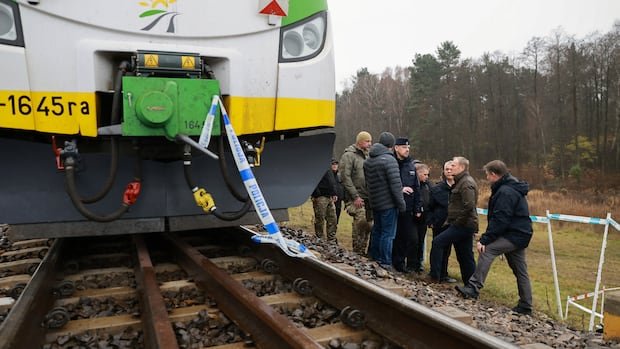

Poland revealed an explosion damaging a railway track to Ukraine, with Prime Minister Donald Tusk attributing it to sabotage aimed at causing a catastrophe. Following this, Polish authorities accused two Ukrainian citizens backed by Russian intelligence as the suspects, who fled to Belarus. In response, Warsaw closed Russia’s last consulate in Gdansk and deployed up to 10,000 troops to safeguard critical infrastructure. This swift action was taken due to Poland’s proximity to Ukraine and previous incidents like Russian drones breaching Polish airspace.
European officials are grappling with an escalating Russian shadow war targeting Ukrainian allies to disrupt and intimidate without triggering a severe reaction. Russia denied involvement in the railway explosion, labeling Warsaw’s claims as “Russophobia.” Despite frequent denials, Western authorities believe Russian intelligence is behind numerous sabotage operations across Europe. These operations often involve recruiting individuals on social media since many Russian agents were expelled post the Ukraine invasion.
Bart Schuurman, a terrorism expert, has tracked incidents linked to Russian agents, including arson, violence, vandalism, and sabotage. These covert operations are designed to be deniable, providing Russia with plausible deniability and shielding against retaliation. Recent serious plots include attempts to send explosive parcels through delivery companies and an arson attack in London orchestrated on behalf of Russia’s Wagner paramilitary group.
A new report by the Center for European Policy Analysis highlighted Moscow’s shadow war driven by a Cold War mentality, aiming to intimidate the West and undermine support for Ukraine. Incidents range from vandalism to state-sponsored terrorism, with a focus on destabilizing Europe. Despite increased monitoring by NATO and fragmented responses, experts stress the need for a unified approach towards countering Russian aggression. Enhancing defenses around critical infrastructure and establishing clear response thresholds are crucial in deterring further escalation.