

Mexico City has initiated a significant project to unearth and identify numerous bodies from a section of mass graves in a municipal cemetery. This effort is part of a comprehensive strategy to address the escalating number of individuals reported as missing. The Director of the Institute of Expert Services and Forensic Sciences (ISPCF), Gerardo Cervantes Arroniz, highlighted that this exhumation project is the largest of its kind ever undertaken in Latin America.
During a recent press conference, Cervantes Arroniz emphasized the long-term nature of this endeavor, which began at the Panteon Civil de Dolores cemetery in the western part of the city. The project, which has been in progress for seven months, originated from a detailed study correlating cemetery records with missing persons cases. This analysis has identified potential matches based on names, fingerprints, and other key details, as explained by Luis Gómez Negrete, who leads the city’s commission for missing persons search efforts.
Approximately 6,600 bodies from 75 burial sites spanning about 200 square meters within the cemetery’s wooded section are slated for exhumation. These unclaimed and unidentified bodies have been interred in layers since the 1960s. One such case involves Sofia Lara Alfonso, who recently discovered that her brother, Carlos Daniel Lara Alfonso, was buried in an area currently undergoing excavation. Despite filing a missing persons report in 2009, the family was never informed about his demise, highlighting a broader issue regarding the treatment of homeless individuals in the city.
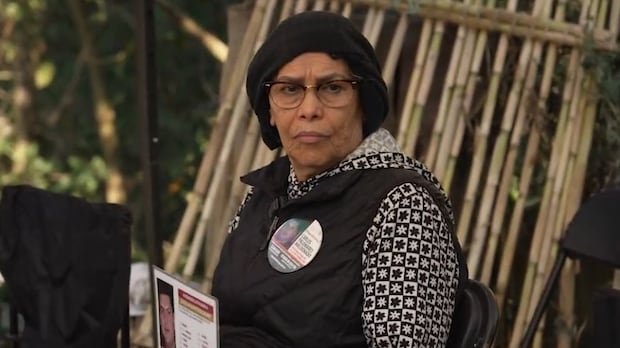
Another poignant story is that of Ana María Maldonado’s relentless 15-year search for her son, Carlos Palomares Maldonado, who disappeared in Mexico City in 2010. Maldonado expressed hope that her son might be among those resting in the common graves at Panteón Civil de Dolores, underscoring the emotional turmoil faced by families grappling with the uncertainty of missing loved ones.
Mexico is grappling with a crisis as over 130,000 individuals are recorded as missing or disappeared nationwide, aligning the country with war-torn nations like Syria and Colombia. Mexico City, where more than 7,000 individuals are registered as vanished, has established a dedicated cabinet committee to address this pressing issue. The city has conducted extensive grid searches to identify common traits in missing persons cases, setting a precedent in the country.
The project’s cost remains undisclosed, and Mexican President Claudia Sheinbaum has raised concerns about the accuracy of the national missing persons registry. Sheinbaum has pledged reforms to enhance the registry’s data quality and accessibility for families seeking closure.
These efforts have drawn individuals like Carlos Ramírez, a member of the collective “Until We Find Them Mexico City,” who attended the exhumation to support other families seeking answers. Likewise, Aryel Arvayo Beltrán, searching for his missing father from Sonora, underscored the ongoing anguish and determination of families seeking closure for their disappeared loved ones.