
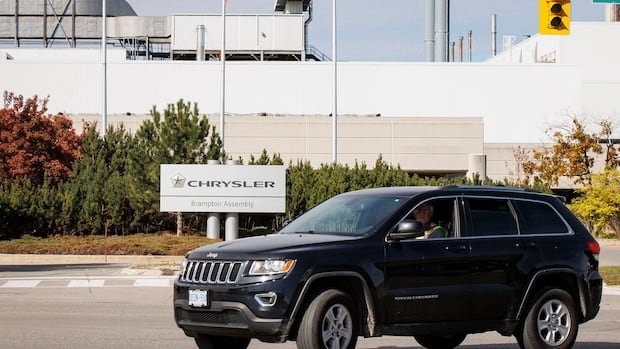

The Canadian government is pushing back against Stellantis and General Motors by reducing the amount of tariff-free vehicles they can bring into Canada from the United States for sale. Previously exempt from paying retaliatory tariffs, the two automakers will now face restrictions on importing U.S.-assembled vehicles.
This action aims to compel the companies to reinvest in Canadian production and workforce to regain their previous tariff exemptions and avoid substantial tariff costs. The government expressed dissatisfaction with the automakers’ decision to downsize their manufacturing presence in Canada, which goes against their commitments to the country and its workers.
Following Stellantis’s announcement of plans to expand in the U.S. and relocate the production of the Jeep Compass from Brampton, Ont., to Illinois, Ottawa took decisive action. General Motors also confirmed the cessation of production of its BrightDrop electric delivery vans at an Ingersoll, Ont., plant due to demand.
In response to the automakers’ failure to uphold their commitments, the government, led by Finance Minister François-Philippe Champagne and Industry Minister Mélanie Joly, announced a reduction in the quota of tariff-free American-assembled vehicles that GM and Stellantis can import by 24% and 50%, respectively.
Stakeholders in the automotive industry have expressed varied reactions to the government’s move. While Flavio Volpe, president of the Automotive Parts Manufacturers’ Association, commended the decision as necessary, Huw Williams, national spokesperson for the Canadian Automobile Dealers Association, raised concerns about potential price hikes affecting Canadian consumers due to tariffs.
Amid escalating tensions, Unifor national president Lana Payne highlighted the government’s approach as a crucial strategy against external pressures, particularly from U.S. President Donald Trump, who is actively influencing corporations to relocate production to the U.S. Ottawa has also considered legal action against Stellantis regarding funding agreements tied to maintaining its Canadian operations.
Prime Minister Mark Carney emphasized the importance of protecting Canadian workers and industries in negotiations with the U.S., particularly in the face of tariffs targeting the auto sector. Discussions with the U.S. administration are now focused on securing relief for the steel and aluminum sectors impacted by tariffs.
As the situation unfolds, the Canadian government is navigating a complex landscape to safeguard its interests and the automotive industry from external pressures and trade disputes, particularly in light of ongoing negotiations and potential legal actions against automakers like Stellantis and General Motors.