

The father of a woman who passed away at the Whitehorse Emergency Shelter in 2023 has initiated legal action against the organization overseeing the facility, asserting that negligence on their part, as well as that of their staff, directly contributed to her demise.
Dale Joe is the father of Josephine Hager, who tragically succumbed to alcohol and morphine overdose after collapsing in a corridor within view of both staff members and security cameras. The lawsuit, lodged with the Yukon Supreme Court on October 6, names the Connective Support Society and five unidentified employees as defendants, alleging that they permitted drug and alcohol use at the shelter. It further contends that despite being aware of Hager’s perilous state due to intoxication and observing her unconscious on the floor, they neglected to check on her or offer assistance.
Mark Wallace, the legal representative for Joe, described Hager’s death as deeply distressing for her family, emphasizing that had she been taken to the hospital sooner, the outcome might have been different. Wallace expressed Joe’s hope that pursuing legal recourse would hold the responsible parties accountable.
In response to inquiries regarding the lawsuit, Connective spokesperson Tyler Blacquiere stated via email that the organization could not provide a timely response by the CBC News deadline. As of now, Connective has not submitted a formal defense, and the lawsuit remains untested in court.
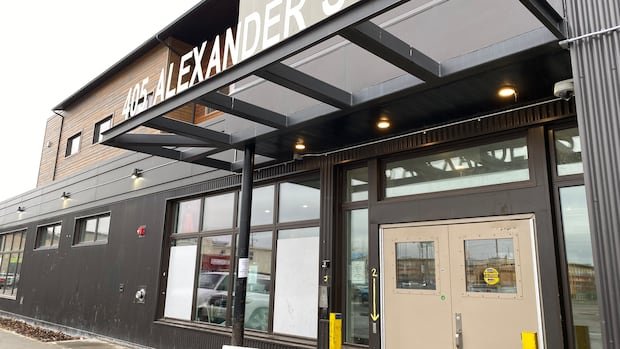
According to the lawsuit’s details, Hager resided in a housing-first apartment on the third floor of 405 Alexander St., the same site housing the emergency shelter in downtown Whitehorse. The legal action alleges that between approximately 3 a.m. and 4:25 a.m. on February 1, 2023, the day of her passing, Hager had multiple interactions with Connective employees, during which it was evidently clear that she was severely intoxicated.
Hager collapsed in a first-floor hallway near the elevators around 4:25 a.m., with Connective staff purportedly walking past her unconscious body. Despite being within view of security cameras and other individuals, she received no aid until around 4:41 a.m. when another shelter user alerted an employee. Subsequently, emergency services were contacted, but it was too late as Hager had already succumbed to a fatal combination of morphine and alcohol toxicity.
The lawsuit asserts that the negligence of Connective employees and the organization itself played a role in Hager’s demise. This negligence allegedly encompassed permitting drug and alcohol consumption, disregarding Hager’s intoxicated state, neglecting to monitor or assist her, and failing to seek medical help despite her unconscious condition.
Furthermore, the lawsuit alleges that Connective was negligent for not establishing adequate policies, procedures, and employee training to handle severely intoxicated clients safely, as well as for failing to enforce regulations on drug and alcohol usage at the shelter.
Joe is seeking damages, including $75,000 for the emotional distress and loss resulting from his daughter’s passing.
Hager was among four Indigenous women whose deaths at the shelter prompted a coroner’s inquest last year, resulting in recommendations for Connective to review shelter policies, training, and prioritize hiring Indigenous personnel. Despite this, Wallace noted that Joe has not observed significant operational changes at 405 Alexander St., raising concerns about the necessity for fundamental alterations in shelter management.
Previously, the families of two other deceased women, Darla Skookum and Myranda Tizya-Charlie, had also filed lawsuits related to their deaths at the shelter, but these cases were subsequently settled out of court.