
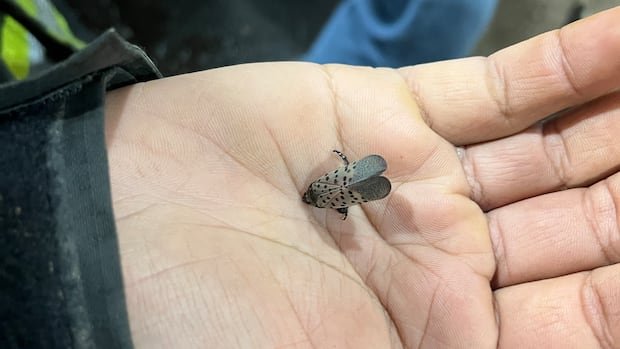

A recent discovery of spotted lanternflies in St. Catharines, Ontario, has raised concerns about the potential invasion of this destructive insect from the United States into Canada.
While there are no confirmed reproducing populations of spotted lanternflies in Canada, experts warn that the invasive insect still poses a significant threat to vineyards, fruit trees, and hardwoods due to its feeding habits that can lead to the death of grapevines.
In a recent incident, Aidan Dagg, a resident of Ontario, found a dead spotted lanternfly and shared the discovery on iNaturalist, a platform for posting and identifying flora and fauna.
Dagg, employed as an inspector at a nursery in St. Catharines, had been vigilant for the insect over the past few years, and this marked his first encounter with it.
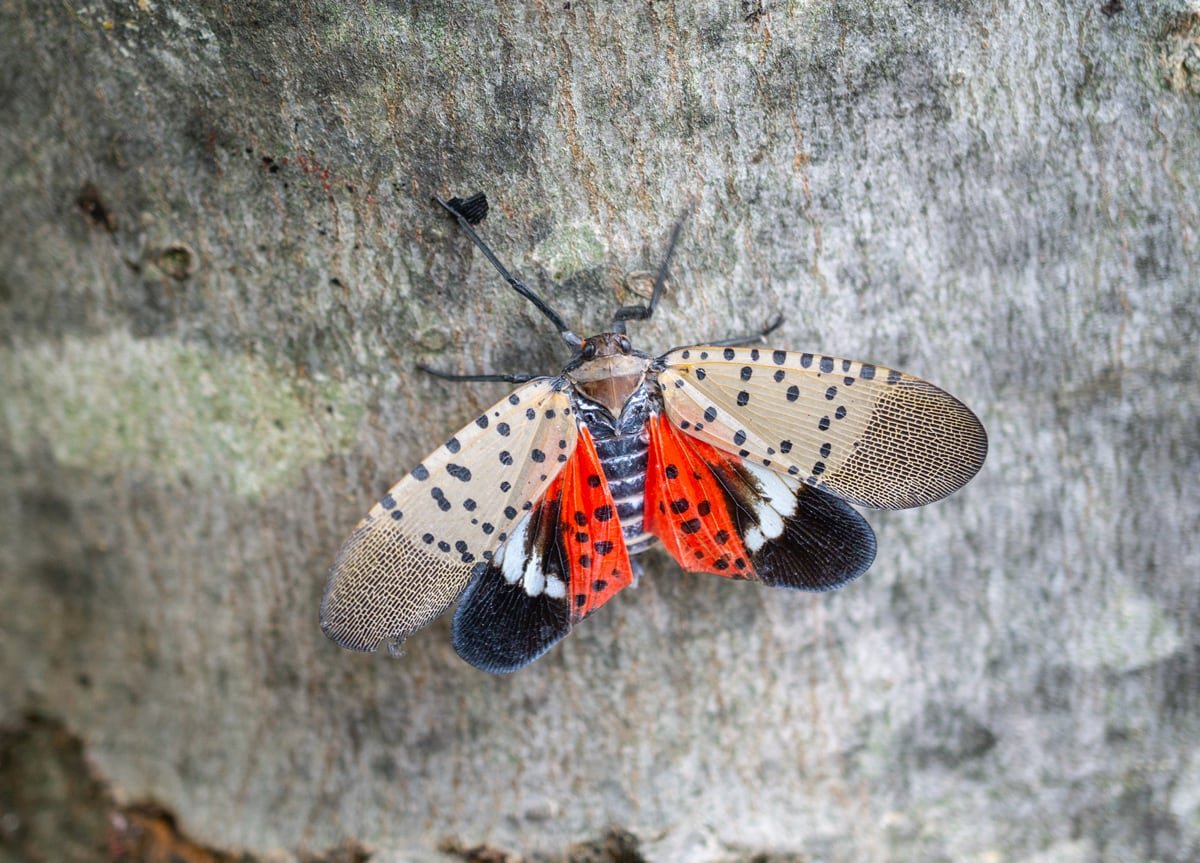
Diana Mooij from the Canadian Food Inspection Agency informed CBC News that the spotted lanternfly is capable of feeding on over 100 tree and plant species, posing a severe threat to the grape and wine industries.
Following Dagg’s report to the CFIA, inspectors promptly investigated and discovered around 30 more dead spotted lanternflies in the same shipment of planting pots from Pennsylvania, which had been stored since the previous autumn.
“I have a keen interest in bugs,” Dagg expressed. “It’s one of the most fascinating bugs we have, but it’s unfortunate that it’s invasive. The spotted lanternfly tends to gather on a plant and drain it of nutrients until it perishes.”
Research scientist Amanda Roe explained that it is common for spotted lanternflies to travel through shipments and adhere to flat surfaces, like vehicles returning from U.S. camping trips.
Roe, associated with Natural Resources Canada at the Great Lakes Forestry Center in Sault Ste. Marie, Ontario, stated, “They may struggle to fly across the Great Lakes, but they excel at hitchhiking.”
She added that all life stages of the insect, from nymphs to adults, can cling to vehicles and trains, with adult spotted lanternflies capable of holding onto the exposed car hood while traveling at speeds up to 95 kilometers per hour.
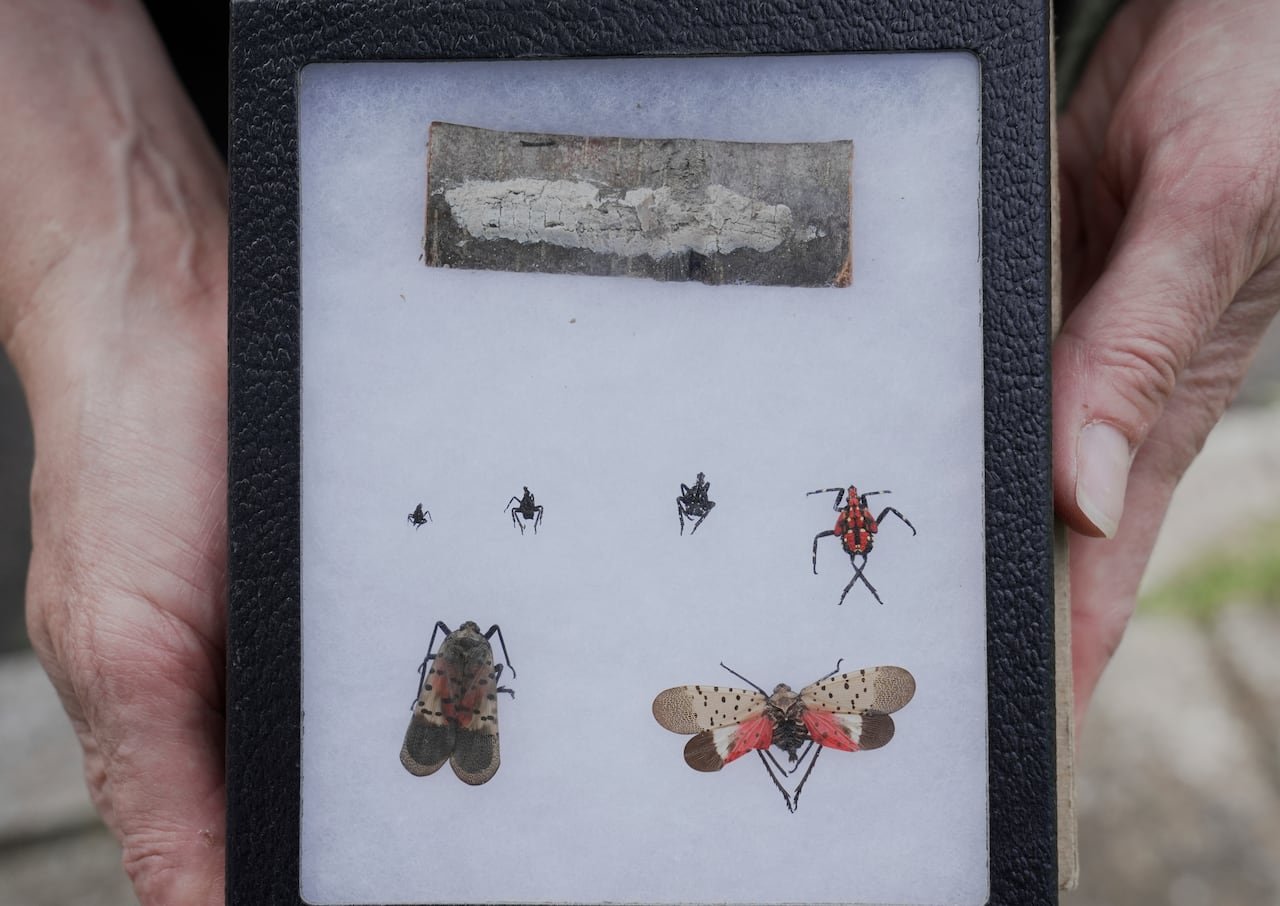
The spotted lanternfly was initially identified in the