

Prime Minister Benjamin Netanyahu announced on Sunday that Israel would have the authority to decide which foreign troops would be permitted to be part of the proposed international force in Gaza as part of efforts to maintain a delicate ceasefire outlined in U.S. President Donald Trump’s plan. The participation of Arab and other nations in providing troops remains uncertain, partly due to the reluctance of Palestinian Hamas militants to disarm as prescribed by the plan, raising concerns for Israel regarding the composition of the force.
While the U.S. government has excluded the deployment of American soldiers in Gaza, discussions have been ongoing with countries such as Indonesia, United Arab Emirates, Egypt, Qatar, Turkey, and Azerbaijan to contribute to the multinational force. Netanyahu emphasized Israel’s sovereignty over security matters and the prerogative to reject unacceptable forces in alignment with the United States’ stance, as confirmed by senior U.S. officials.
In a recent revelation, Netanyahu indicated opposition to the involvement of Turkish security forces in Gaza, marking a significant shift in Turkish-Israeli relations following the Gaza conflict. Israel, which imposed a blockade on Gaza to support its military operations against Hamas after a cross-border attack by the militant group in October 2023, still maintains control over access to the region.
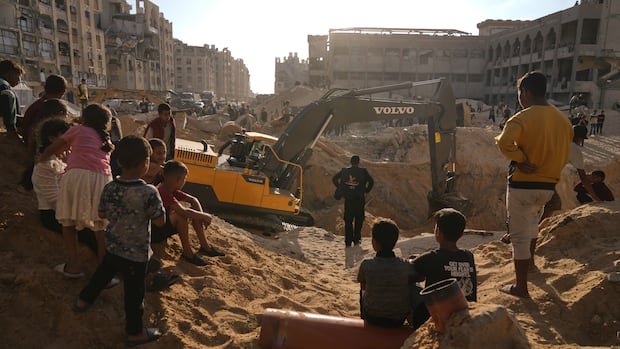
Meanwhile, Hamas has broadened its search for the bodies of hostages in Gaza, with Egypt dispatching a team equipped with expert personnel and machinery to aid in the recovery efforts. The ceasefire brokered by the U.S. mandates Hamas to promptly return Israeli hostages’ remains, reciprocated by Israel’s commitment to repatriate Palestinian bodies. Despite the return of some hostages’ remains, challenges persist in the process due to extensive destruction in the area.
Looking ahead, the ceasefire plan entails complex tasks like the disarmament of Hamas and the governance of Gaza post-conflict, where international bodies urge Israel to facilitate more humanitarian assistance. Media access to Gaza remains restricted, limited to brief interactions with the Israeli military, and Hamas continues its search for the remaining hostages’ bodies.
Trump emphasized close monitoring of Hamas’ compliance with body returns within the next 48 hours, urging for swift action. Hamas cites obstacles in retrieving remains due to the war’s devastation. Egyptian mediators, with specialized equipment, entered Gaza to support the ceasefire, enhancing peace efforts in the region.
In response to Israeli strikes in Gaza, Netanyahu defended the military’s actions, targeting militants linked to the Palestinian Islamic Jihad group. Hamas condemned the strike as a breach of the ceasefire, accusing Netanyahu of undermining U.S. peace initiatives. Netanyahu reaffirmed Israel’s security control and dismissed speculations of external influence over security decisions in Gaza.
On previous occasions, Israel’s military operations in Nuseirat were in response to Hamas activities, resulting in casualties among Palestinians. The conflict has claimed a significant number of lives, with conflicting reports on the exact death toll.