
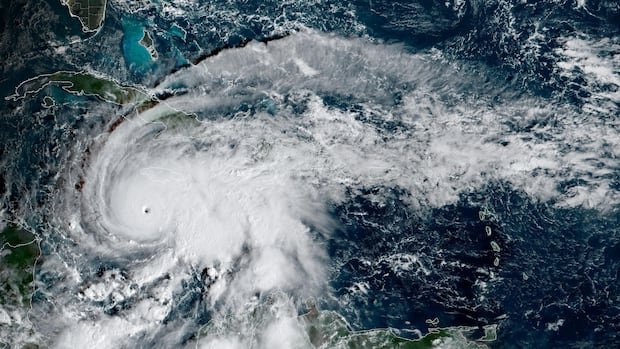

Hurricane Melissa, among the most powerful ever recorded in the Caribbean, is expected to make landfall in Jamaica early on Tuesday after experiencing a rapid intensification, a weather event increasingly leading to destructive storms in the area.
Initially classified as a tropical storm on Saturday morning, Melissa swiftly escalated its wind speeds from around 115 kilometers per hour to 225 kilometers per hour by Sunday. By Monday morning, it had escalated to a Category 5 hurricane, marking one of the quickest intensifications witnessed in the Caribbean.
By Monday afternoon, the hurricane’s winds had surged to 281 kilometers per hour, as reported by the U.S. National Hurricane Center (NHC), making it the most potent storm globally in 2025 so far.
Due to its slow movement, Melissa poses significant danger, warned Akshay Deoras, a research scientist at the National Centre for Atmospheric Science in the UK. He emphasized that the sluggish pace of the storm could result in prolonged heavy rainfall over Jamaica.
The storm has already claimed six lives across the Caribbean, prompting Jamaica to brace for what could potentially be its most severe hurricane catastrophe. Certain regions of the country are forecasted to receive up to a meter of rainfall, according to the NHC.
Just the prior year, Jamaica’s southern region was struck by Hurricane Beryl, resulting in losses totaling approximately $200 million US, equivalent to 1.1 percent of the country’s GDP. Beryl also underwent rapid intensification, similar to Melissa.
Deoras pointed out two key factors driving Melissa’s strength: unusually high sea surface temperatures in the Caribbean, ranging two to three degrees above average, and the fact that tropical storms draw energy from the warm surface water layer.
Melissa thrived on these abnormally warm conditions, facilitating its rapid development during its leisurely passage through the region over the weekend.
The rising ocean temperatures worldwide are influencing climate systems in novel ways. An extensive heatwave in the Pacific Ocean has led to atypical temperatures in North America this fall. Last year saw the warmest global average sea surface temperatures on record.
Shel Winkley, a meteorologist at Climate Central, a scientific non-profit, remarked that climate change has significantly increased the likelihood of these warm ocean temperatures, making them 500 to 700 times more probable. Climate Central’s analysis indicates that climate change has bolstered Melissa’s peak wind speed by approximately 16 km/h, elevating the potential damages by 50 percent.
Winkley noted that four out of the five hurricanes this season have undergone extreme rapid intensification, a phenomenon now occurring regularly compared to a few decades ago.
This escalation in rapid intensification in hurricanes is a concerning trend observed multiple times per season, signaling a shift in weather patterns over the years.