
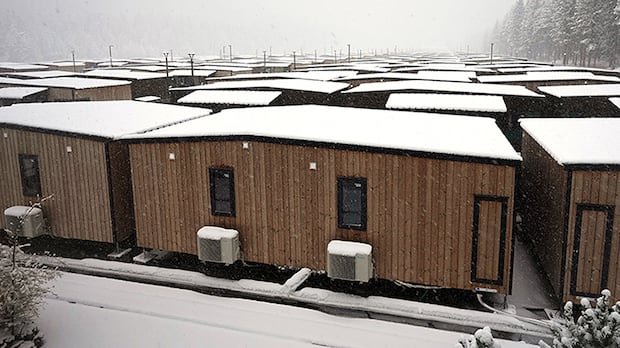

Winter Olympic athletes staying at Cortina d’Ampezzo’s Athletes Village should anticipate modest accommodations rather than luxury. The temporary Village, housing up to 1,400 athletes and team members during the Milan Cortina Games from Feb. 6-22, comprises 377 rented mobile homes closely clustered on a valley floor. The Associated Press was granted early access to the facility, situated in a secluded area 10 minutes by car or an hour’s walk north of downtown Cortina.
The rooms are basic and minimalist, emphasizing proximity to the Dolomites over lavish amenities. Fabio Saldini, the Italian government commissioner overseeing Games infrastructure, highlighted the Village’s tranquility, offering athletes a chance to immerse themselves in the mountain ambiance. Saldini emphasized the temporary nature of the facilities, designed for post-Games removal to enhance, rather than disrupt, the environment.
Accommodating athletes is a critical task for Olympic organizers, especially given the diverse locations of the Milan Cortina Games. Norway has opted to lodge its skiers in hotels instead of the official Olympic villages. However, countries like the U.S., Germany, and Italy plan to utilize the villages, except for prominent athletes such as Lindsey Vonn and Mikaela Shiffrin, who may seek alternative accommodations.
Cortina will host various events, including women’s alpine skiing, curling, bobsled, luge, and skeleton during the Games, with the Village playing a vital role in the upcoming Paralympics from March 6-15. The Village offers common areas like a gym for all participants, promoting a sense of community among athletes.
Each mobile home at the Village features two rooms accommodating up to two individuals each, complete with private bathrooms and showers. Athletes may encounter varying weather conditions, from biting winds to mesmerizing mountain vistas, reflecting the rugged beauty of the location.
Heating in the Village is personalized, with each room equipped with individual controls for maintaining a comfortable temperature. The use of electric heating units and infrared panels ensures a cozy stay for athletes, eliminating the need for external climate control devices.
The mobile homes, costing 38 million euros ($44 million US) in total, will be repurposed post-Games as part of camping sites across Italy, with some earmarked for a local hockey club. Despite initial tree removal for construction, efforts to replant and preserve the surrounding natural environment have been undertaken.