
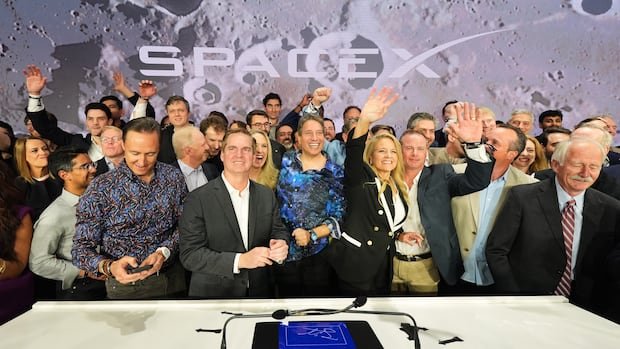

SpaceX made a remarkable debut on the Nasdaq exchange, surpassing a value of $2 trillion as investors eagerly bought into Elon Musk’s diverse business portfolio that includes rockets, internet services, and AI technologies after a highly successful initial public offering (IPO).
Trading began on Friday morning with SpaceX shares fluctuating between 15% and 30% above the previous day’s pricing, ultimately closing at around $161 per share, marking a 19% increase and elevating SpaceX to the sixth-largest company in the U.S. The trading volume exceeded 500 million shares, totaling approximately $80 billion, with minimal volatility throughout the session.
The IPO generated significant anticipation, with concerns surrounding the exchange’s capacity to handle the launch, especially amidst recent uncertainties in technology stocks. Despite fears of a potential market impact from a surge in new IPOs, investors, ranging from institutions to Musk enthusiasts, were exuberant by the end of the day.
Market experts, including Dan Coatsworth of AJ Bell, praised SpaceX’s IPO success, highlighting its record-breaking financial achievements and rapid valuation growth, emphasizing its significant impact on the market landscape.
The listing solidified Musk’s status as the world’s first trillionaire, despite facing challenges during his involvement in the Trump administration. SpaceX executives, led by President Gwynne Shotwell and CFO Bret Johnsen, celebrated the milestone at the Nasdaq market site in New York, while Musk hosted a separate event for employees in Texas.
The IPO’s monumental success reflects Musk’s longstanding ambitions in space and technology, attracting a surge of retail investors and reshaping traditional IPO strategies. With proceeds exceeding $75 billion, the IPO surpassed Saudi Aramco’s 2019 record, signaling a promising future for SpaceX’s market performance.
SpaceX’s potential inclusion in the Nasdaq 100 index and the subsequent demand from passive funds and ETFs are projected to further boost its market value. Analysts anticipate a reorganization of investment portfolios following SpaceX’s debut, with possible selling pressure on other tech giants as funds reallocate investments.
Determining SpaceX’s actual value remains a challenging task despite the IPO excitement. With a market opportunity estimated at $28.5 trillion, SpaceX’s leading position in space operations and the revenue from Starlink underline its robust foundation for future growth.
Analysts compare SpaceX to Tesla, citing their shared potential for groundbreaking innovations and market dominance in their respective industries. Challenges lie ahead for SpaceX, including competition from rivals like Blue Origin and the need to diversify into new markets beyond Earth.
Despite its high valuation metrics, some analysts believe SpaceX is overvalued, suggesting a more realistic valuation around $780 billion. Investors remain optimistic about SpaceX’s long-term prospects, likening its disruptive potential to that of Amazon and expressing a willingness to weather market fluctuations for a chance to be part of its growth journey.