
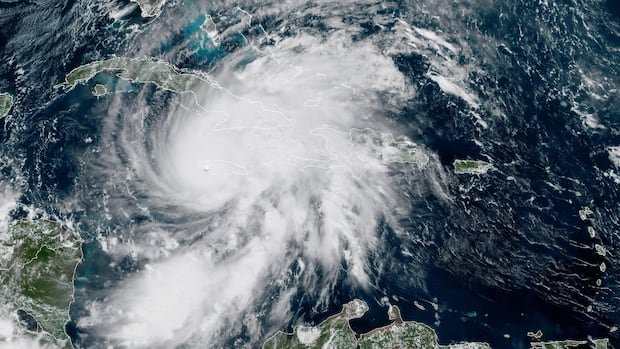

Millions of individuals throughout the Caribbean are grappling with the destructive aftermath of Hurricane Melissa, which swept through the region recently. Similar to many recent storms, Melissa underwent a rapid intensification, characterized by a significant increase in maximum sustained wind speed over a 24-hour period.
During this time, Melissa’s strength surged by 112 km/h, leading to what some experts are labeling as extreme rapid intensification. The continued burning of fossil fuels, resulting in the release of CO2 into the atmosphere, has caused the planet to warm, triggering various changes in weather patterns and the overall climate.
Scientists are increasingly proficient at studying the impact of climate change on severe weather occurrences like droughts, floods, and hurricanes. Various organizations, including Environment and Climate Change Canada and ClimaMeter, have conducted analyses to assess the influence of climate change on Hurricane Melissa.
A rapid attribution analysis by ClimaMeter revealed that both climate change and natural variability played roles in the formation and trajectory of Hurricane Melissa. It was discovered that hurricanes akin to Melissa are approximately 10% wetter and windier than in the past, attributed to the changing climate, with natural variability also contributing to its characteristics.
One significant way in which climate change influences hurricanes is through the warming of oceans. The historically warmer-than-normal temperatures in the oceans serve as fuel for hurricanes, with warmer waters providing increased energy. Meteorologist Shel Winkley from Climate Central noted that the Caribbean Sea’s temperature is currently 1.4 C to 2 C warmer than average, significantly impacting hurricane intensification.
The warmer ocean temperatures have made hurricanes more prone to rapid intensification, as observed with four out of five hurricanes in the Atlantic Basin. Imperial College London’s Grantham Institute conducted an analysis using the Imperial College Storm Model (IRIS), indicating that climate change boosted Melissa’s wind speed by approximately seven percent, equivalent to 18 km/h.
While the focus often lies on rapid hurricane intensification, experts like Ralf Toumi from the Grantham Institute emphasize the importance of considering the storm’s impact leading up to landfall. Toumi highlighted the transformation of Melissa into a Category 6 storm as it approached the island, showcasing the severity of the event.
Researchers concluded that events like Hurricane Melissa are now four times more likely compared to pre-industrial times. Climate change has significantly altered the nature of hurricanes, making them more destructive and increasing the frequency of extreme events. The authors noted that without climate change, the damage caused by a weaker hurricane would have been around 12% less.
The collective message from various rapid attribution groups is consistent: climate change is reshaping hurricanes. As the world continues to emit fossil fuels, warming oceans will fuel more destructive hurricanes, underscoring the urgent need for mitigation and adaptation measures to address these escalating risks.