
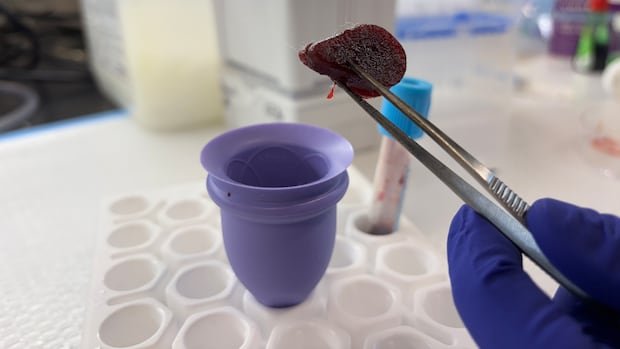

A significant portion of the global population menstruates, yet menstrual product innovation has been lacking, as highlighted by a researcher at McMaster University. Zeinab Hosseinidoust, a professor in the chemical engineering department, collaborated with associate professor Tohid Didar to develop smart tablets designed to enhance menstrual cups’ accessibility and address potential messiness issues.
According to UN Women, more than two billion individuals worldwide menstruate, with one in six Canadian menstruators experiencing period poverty. The average person in Canada spends approximately $6,000 on period products in their lifetime, and one in four Canadians associate periods with being dirty and unclean.
Menstrual cups have gained popularity for their eco-friendly and cost-effective nature, allowing for long-term reuse. Hosseinidoust investigated why some individuals hesitated to use menstrual cups, discovering concerns about potential messiness expressed in social media comments.
The newly created tablets aim to simplify the cup-changing process, particularly in public settings, with positive feedback from individuals like McMaster student Dior David. These tablets, made from seaweed-based materials, are flushable, inexpensive, and offer convenience for users.
McMaster student Jennifer Abraham appreciates the ongoing innovations in menstrual products, emphasizing the importance of diverse product options and education to empower individuals in choosing what suits them best. Abraham also stresses the significance of research in destigmatizing periods and promoting healthy discussions.
While the tablets are single-use, countering the reusability aspect of menstrual cups, they are biodegradable, cost-effective, and eco-friendly. Furthermore, the tablets are crafted from seaweed, a renewable resource. Hosseinidoust envisions the tablets not only encouraging menstrual cup adoption but also potentially detecting and preventing infections like UTIs, bacterial vaginosis, and staph infections.
Hosseinidoust’s exploration of integrating bacteriophages into menstrual products to detect and combat infections shows promise for broader applications beyond the current tablets. This groundbreaking research signifies a significant step towards innovation in menstrual health products, addressing long-standing gaps in the field.