
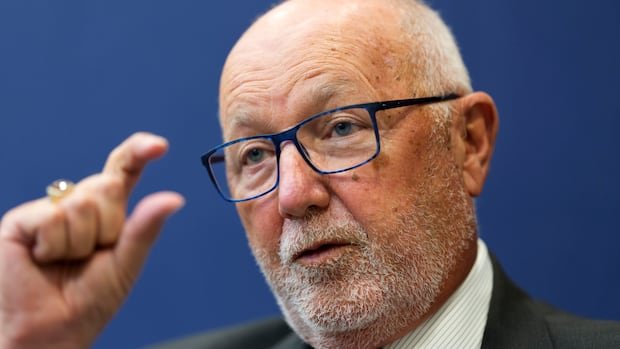

U.S. Ambassador to Canada Pete Hoekstra has expressed that despite 14 months of trade discussions with the Trump administration, minimal progress has been made in resolving issues related to the future of CUSMA and other trade matters. Hoekstra emphasized the commitment to ongoing dialogue to address these challenges, acknowledging that there is still a significant distance to cover in reaching a consensus between Canada and the United States.
Regarding the trade negotiations, Hoekstra highlighted that President Donald Trump and Trade Representative Jamieson Greer have affirmed their intention to continue discussions through July and August. He remains optimistic about the possibility of resolving these issues promptly, although the prolonged duration of the talks without substantial advancement is a concern.
In a recent announcement, the Trump administration declared that the U.S. would not extend the free trade agreement with Canada and Mexico, signed during Trump’s first term. Despite this decision, the agreement remains operational while negotiations persist, extending for another decade with annual reviews unless the U.S. issues a formal six-month withdrawal notice.
During a conversation on CBC’s Ottawa Morning, Hoekstra addressed the potential for Canada to explore alternative trade partnerships due to uncertainties in the Canada-U.S. trade relationship. He emphasized that a significant portion of trade under CUSMA remains tariff-free and predictable, even as the U.S. imposes tariffs on goods outside of the agreement’s scope, adhering to the existing rules.
While acknowledging Canada’s efforts to diversify its trade alliances, Hoekstra highlighted the U.S.’s interest in acquiring three to four million additional barrels of oil per day. He underscored Canada’s strategic position as a primary supplier but indicated that alternative sources could be sought if an agreement with Alberta is not reached. Hoekstra emphasized the U.S.’s willingness to explore other oil supply options without specifying potential sources.
In response to the evolving dynamics, Energy Minister Tim Hodgson emphasized the importance of expanding Canada’s oil market beyond the U.S. to secure competitive global prices. Hodgson highlighted the need to demonstrate alternative markets to the U.S., particularly as current trade practices result in revenue loss for Canada.
In conclusion, while Hoekstra views Alberta as a favorable source for meeting U.S. oil demands, he reiterated the U.S.’s readiness to consider alternative suppliers globally if necessary. The discussions underscore the complexities and strategic considerations involved in the ongoing trade negotiations between Canada and the United States.