
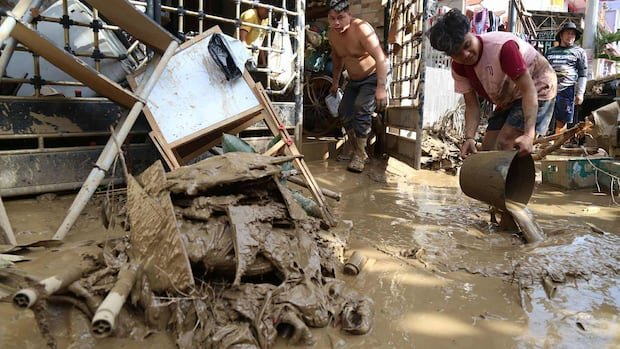

Philippine President Ferdinand Marcos Jr. has announced a state of emergency following the impact of Typhoon Kalmaegi, which resulted in the deaths of at least 114 individuals and left 127 others missing in central provinces. This calamity marks the most devastating natural disaster in the country this year.
The majority of the fatalities occurred due to drowning in flash floods, particularly in the heavily affected central province of Cebu, before the typhoon moved out of the region into the South China Sea. Nearly two million people were affected by the typhoon, with over 560,000 villagers displaced, including around 450,000 individuals relocated to emergency shelters.
The declaration of a state of emergency will expedite the government’s fund allocation processes, aiming to prevent food hoarding and price gouging. Typhoon Kalmaegi departed from western Palawan province into the South China Sea, carrying sustained winds of up to 130 km/h and gusts reaching 180 km/h.
Bernardo Rafaelito Alejandro IV, the deputy administrator of the Office of Civil Defence, along with provincial officials, reported the highest number of casualties in Cebu, where the typhoon caused flash floods and significant swelling of rivers and waterways.
The devastating flooding led to residential communities being engulfed, forcing residents to seek refuge on rooftops, where they awaited rescue as waters continued to rise. The Philippine Red Cross received numerous distress calls from individuals stranded on rooftops in Cebu.
In Cebu, at least 49 individuals lost their lives in floods, while others perished due to landslides and falling debris. Cebu Governor Pamela Baricuatro expressed concerns over the impact of years of quarrying, which contributed to the overflowing of nearby rivers, exacerbated by substandard flood control projects in the province.
Cebu, with a population exceeding 2.4 million, declared a state of calamity to facilitate the swift distribution of emergency aid. This region was still recovering from a recent 6.9 magnitude earthquake that resulted in numerous casualties and displacements.
As Kalmaegi heads towards Vietnam and Thailand, Central Vietnam braces for further rainfall and ensuing challenges following days of record precipitation that led to flash floods and landslides. The storm is expected to reach Vietnam’s coast on Friday morning, while Thailand’s northern, eastern, and central areas are on alert for heavy rainfall that may trigger floods and landslides in the coming days.