

The Liberal government has introduced comprehensive new legislation aimed at safeguarding victims and survivors of sexual and intimate partner violence, as well as shielding children from predators. Referred to as the Protecting Victims Act, the government hails it as a significant overhaul of the Criminal Code, challenging a 2016 Supreme Court ruling permitting cases to be halted due to significant delays.
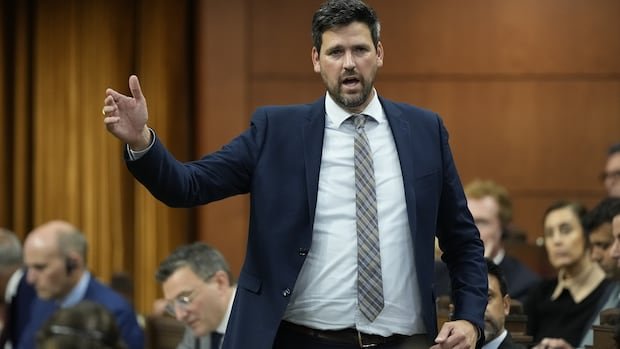
Under this legislation, penalties for sexual offenses like the distribution of intimate images, sexual deepfakes, and engaging in sexual activities with minors would be heightened. Justice Minister Sean Fraser emphasized the bill’s importance in protecting vulnerable children from exploitation and addressing concerns about violence against women, including potentially fatal violence.
The Protecting Victims Act seeks to reinstate mandatory minimum sentences that were previously ruled unconstitutional by Canadian courts. Officials clarified that these sentences were deemed unconstitutional due to restrictions on courts’ ability to consider exceptional circumstances and provide lighter sentences when necessary. By allowing courts more discretion in sentencing, the Act aims to ensure the constitutionality of mandatory minimums moving forward.
In cases necessitating imprisonment, courts would have the flexibility to impose lighter sentences under the Protecting Victims Act, although incarceration would still be mandatory. Notably, the legislation would revive all mandatory minimum sentences previously nullified by the courts that are still in effect, excluding those already repealed by Parliament.
The bill, known as C-16, intends to reinstate several mandatory minimum penalties for sexual offenses involving children, including possessing or accessing child sexual abuse material. The changes follow a Supreme Court ruling that declared a one-year mandatory minimum sentence unconstitutional in specific cases involving individuals possessing child exploitation images.
Additionally, C-16 aims to combat online threats such as sextortion and child luring by criminalizing the mere act of threatening to distribute child abuse or intimate images. It also proposes measures to prosecute individuals exploiting children overseas and targeting criminal groups that coerce or manipulate children into committing crimes.
To address intimate partner violence, the legislation classifies hate-motivated murder and femicide as first-degree offenses, even if not premeditated. Femicide cases would be treated as first-degree murder if a pattern of abuse or coercive control can be established, regardless of premeditation.
Furthermore, the Act introduces a new offense targeting patterns of coercive or abusive behavior, enabling intervention before situations escalate into violence. It also updates laws concerning revenge porn, extending protections to cover deepfake technologies.
The Protecting Victims Act aims to address trial delays and stays, setting benchmarks for complex cases and outlining alternatives to staying trials that exceed specified time limits. The bill also seeks to make it easier for victims of sexual abuse to testify by raising the threshold for accessing their therapeutic records and expanding access to testimonial aids without court approval.
In summary, the Protecting Victims Act encompasses a wide range of measures aimed at enhancing the legal system’s response to sexual and intimate partner violence, protecting vulnerable populations, and ensuring justice for victims.