
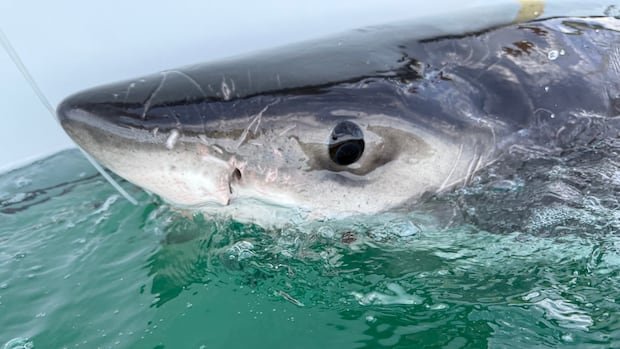

Bella, a juvenile great white shark weighing over 730 pounds, is currently spending her summer in the waters off Atlantic Canada. On July 4, she was tracked moving through the Gulf of the St. Lawrence near Quebec’s Magdalen Islands. This tracking information comes from the OCEARCH shark tracking website based in Florida.
Bella was first sighted off the Eastern Coast of Prince Edward Island on June 29, marking the first documented great white shark appearance in the Gulf of the St. Lawrence for the 2026 season, as reported by the St. Lawrence Shark Observatory.
Having been tagged last summer in Mahone Bay, N.S., Bella has been on a journey northward over the past month. She has traveled from Cape Cod waters to the Gulf of Maine, passing through the south shore of Nova Scotia, north of Prince Edward Island, and most recently, reaching the Gulf of St. Lawrence.
While the increase in white shark sightings may cause concern, experts emphasize that this behavior is part of their natural range and not unusual. White sharks have historically frequented Atlantic Canada waters for thousands of years, as John Tyminski, OCEARCH’s data scientist, highlighted.
The recovery of white shark populations in recent years, attributed to protective measures and rebounding seal populations in Atlantic Canada, signifies a positive shift towards ocean balance. Improved tracking technology and increased public involvement in shark monitoring have also contributed to the rise in white shark sightings.
Although the exact number of white sharks in Atlantic Canada waters is challenging to estimate, researchers suggest there are likely over 2,000 white sharks passing through Mahone Bay annually. Warmer ocean temperatures are also playing a role in the increased sightings.
While white sharks are present in the Gulf of St. Lawrence, there have been no records of them entering the St. Lawrence river itself. The public is advised to exercise caution when swimming, avoiding murky waters and seal-populated areas.
Shark attacks in Canada are rare, with only 15 confirmed attacks over the past 330 years and one recorded shark-related human death in 1953 off the coast of Fourchu, N.S.
Notable white shark sightings in Atlantic Canada, such as Contender, a 1,653-pound male great white shark, emphasize the importance of ongoing shark monitoring efforts. These sightings, including encounters with scuba divers and fishermen, underscore the presence of white sharks in Canadian waters.
White sharks have been observed in various Canadian regions, from the Gulf of St. Lawrence to Vancouver Island and Haida Gwaii. Researchers continue to study these apex predators to better understand their behavior and ensure public safety.