
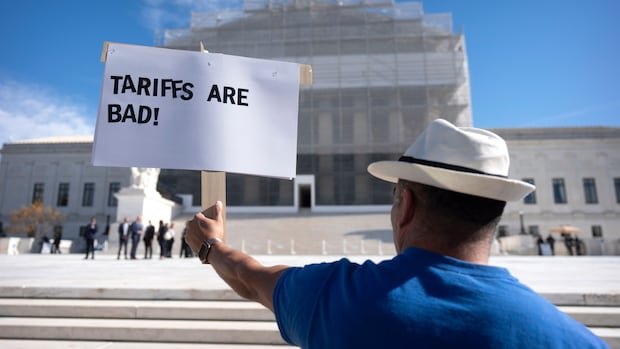

President Donald Trump opted out of attending the Supreme Court oral arguments on his tariff policies, stating, “It’s not about me.” Instead, his Treasury Secretary Scott Bessent was expected to be the most prominent attendee.
Unexpectedly, comedian John Mulaney made an appearance at the proceedings without providing reasons for his presence. Mulaney had previously discussed the similarities between Supreme Court arguments and stand-up comedy on lawyer Neal Katyal’s podcast.
During the hearing, Katyal presented arguments for small businesses that sued the Trump administration over the tariffs issue.
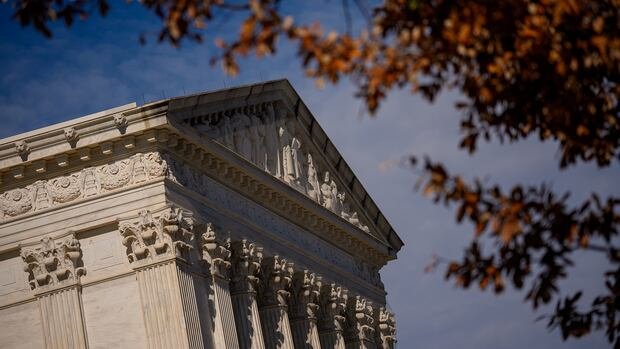
The U.S. Supreme Court heard oral arguments for and against U.S. President Donald Trump’s controversial global tariffs. Conservative-leaning justices displayed skepticism with sharp questioning of Trump’s Solicitor General John Sauer.
Katyal directly addressed the court, stating, “Tariffs are taxes. They take dollars from Americans’ pockets and deposit them in the U.S. Treasury.” He emphasized that the power to tax resides solely with Congress as per the U.S. Constitution. The core issue in the case revolves around whether the tariffs qualify as a tax.
The administration’s representative, Solicitor General John Sauer, argued against the notion that the tariffs represent a tax, a stance that did not resonate well with the court, including conservative justices like Chief Justice John Roberts.
Roberts questioned Sauer on who bears the tariffs’ cost, highlighting the complexities involved in determining the tariff payers. Justice Neil Gorsuch also expressed doubts about Sauer’s arguments during the hearing.
Notably, Trump is the first president to use the 1977 International Economic Emergency Powers Act (IEEPA) to implement tariffs, a move that has faced legal challenges in lower courts.
Several justices, including Amy Coney Barrett, scrutinized the administration’s authority to impose tariffs under the IEEPA without explicit congressional approval. The skepticism displayed by conservative justices during the hearing hints at potential legal challenges for Trump’s tariff policies.
Analysts observing the Supreme Court proceedings noted a prevailing tone of skepticism among the conservative justices towards the administration’s arguments. Speculation suggests a possible ruling against the Trump administration, with differing predictions on the potential split among the justices.
The final decision from the Supreme Court on the legality of the tariffs is anticipated in the coming weeks or months. If deemed unlawful, the Treasury may be required to refund the significant tariff revenues collected thus far.
While the ruling may impact certain tariffs affecting the Canadian economy, Trump’s imposition of tariffs on specific Canadian exports, particularly under the Canada-U.S.-Mexico Agreement, could face scrutiny and potential reversal.
Current data indicates substantial tariff collections from imports from Canada, reflecting the financial impact of the tariffs imposed under the IEEPA.
<figcaption class