
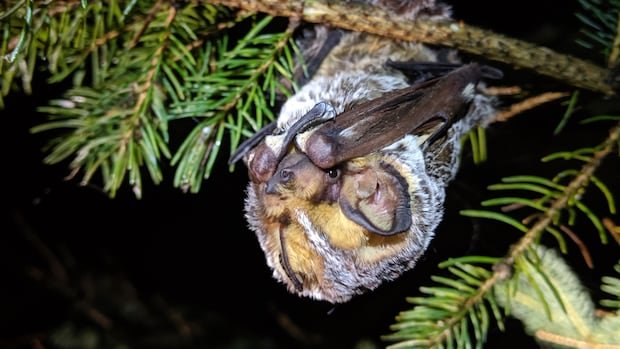

In the clash between bats and wind energy lies a grim narrative of environmental solutions. Bats, often associated with eerie myths, are facing a critical threat in Canada due to wind turbines causing substantial harm to their populations over several decades.
Experts like Cori Lausen, leading bat conservationist at the Wildlife Conservation Society, emphasize the urgent need to protect migratory bats from extinction. The hoary bat, eastern red bat, and silver-haired bat, all endangered species in Canada, are at risk of significant population declines according to Canada’s Committee on the Status of Endangered Wildlife.
Research published in Biological Conservation in 2017 warns of a potential 50 to 90 percent decline in hoary bat populations within the next 50 years, with extinction looming in the not-so-distant future.
The perils of wind turbines to bats were first realized by Lausen in the early 2000s during her studies at the University of Calgary. Investigations initiated after discovering bat fatalities near wind turbines highlighted the grave impact of these structures on bat mortality rates, either through direct collisions with turbine blades or pressure differentials near the turbines.
The University of Calgary, in collaboration with TransAlta, introduced a solution known as curtailment to mitigate bat deaths, suggesting operational pauses during low wind periods and peak bat migration seasons. This approach, supported by research in Alberta in 2022, proved effective in reducing bat fatalities with minimal profit impact.
However, despite regulatory efforts to limit bat deaths at wind turbines, challenges persist due to the proliferation of wind farms and outdated turbine technologies. Smart curtailment strategies, such as technology that detects and halts turbine operations when bats are nearby, offer a promising solution to mitigate bat fatalities effectively.
As the industry moves towards embracing innovative curtailment technologies, regulators and wind energy companies are urged to prioritize the protection of bat populations by restricting wind farm development along migratory routes. The collective aim is to safeguard bat species from extinction while advancing renewable energy technologies to ensure a sustainable future for both wildlife and clean energy solutions.