
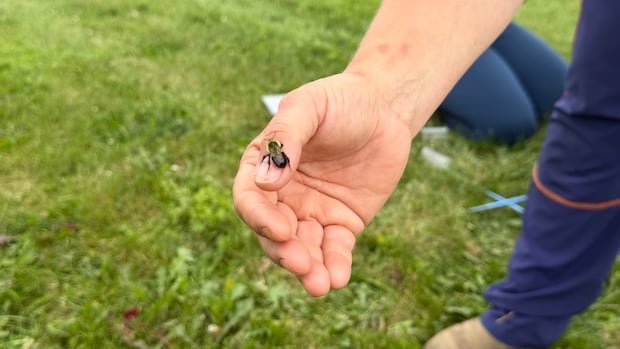

Nature NB is currently conducting field surveys in Fredericton to study native bumblebee species. This initiative aims to create a detailed map of bumblebee locations and habitats in New Brunswick and the Maritimes. The program, established by the Mi’kmaq-led Unama’ki Institute of Natural Resources, is focused on gathering baseline data to support conservation efforts and informed decision-making for protecting bumblebee habitats.
Francie Morgan, the program coordinator for Nature NB, is leading the survey efforts in collaboration with local partners such as the Amlamgog (Fort Folly) Habitat Recovery team, EOS Eco-Energy, and the Pays de Cocagne Sustainable Development Group. The team is currently surveying three sites in different neighborhoods on Fredericton’s north side, using insect nets and vials to identify bumblebee species based on unique color patterns and shapes on their bodies.
During the initial survey in June, Morgan documented six different bumblebee species, out of the 18 known species in New Brunswick. Collected data is shared with various organizations, including the Unama’ki Institute and iNaturalist, to contribute to global research efforts. The ultimate goal is to protect pollinators and their habitats, as conservation of bumblebees also benefits other species like wasps, monarchs, and hummingbirds.
The ongoing program by Nature NB is crucial as the New Brunswick government recently released a draft recovery strategy for two threatened bumblebee species: the Bohemian cuckoo bumblebee and the yellow-banded bumblebee. The strategy emphasizes the need for standardized monitoring protocols and collaboration with researchers and non-profit organizations to fill knowledge gaps and support conservation efforts.
Bumblebees play a vital role in maintaining ecosystem stability and resilience by supporting native plant diversity. To help wild pollinators, residents are encouraged to let yard spaces grow wild, creating foraging habitats for bumblebees and contributing to a sustainable environment. This grassroots approach can have a significant impact on supporting local pollinators and preserving biodiversity.