
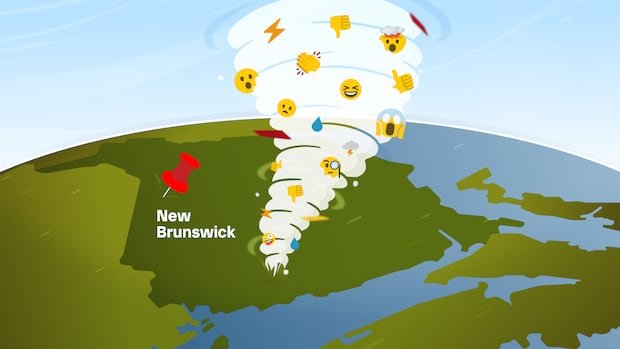

On July 14, a severe thunderstorm watch was issued for New Brunswick by Environment Canada, indicating favorable atmospheric conditions for thunderstorm development. The watch also mentioned a potential tornado risk. However, no severe thunderstorms or tornadoes occurred, leading to a wave of misinformation and panic on social media.
Sander van der Linden, a psychology professor at the University of Cambridge, highlighted that extreme weather events, natural disasters, and health emergencies often attract misinformation due to the real-time and uncertain nature of such situations.
It’s important to note that a “watch” from Environment Canada is different from a “warning.” A watch advises preparedness for severe weather, while a warning indicates immediate action is needed due to ongoing or imminent severe weather.
Despite a low tornado risk mentioned by Jill Maepea, an Environment Canada meteorologist, social media hype prior to the watch’s issuance fueled misinformation. Maepea explained that predicting convective weather can be challenging as it can develop rapidly and be unpredictable.
Following the watch, social media criticism arose regarding the timing of Environment Canada’s notice. Misinterpretations of the information circulated, falsely claiming tornado warnings were in effect when they were not.
The proliferation of AI-generated images further complicated the situation, blurring the line between real and fake content online. Aaloak Jaswal from the University of New Brunswick emphasized the ease with which AI can create convincing misinformation, urging vigilance in verifying online content.
In instances of misinformation during emergencies, Jaswal stressed the importance of verifying sources to maintain trust in official communications. Prof. van der Linden advocated for “pre-bunking,” a proactive approach to warning others about potential misinformation and promoting a community-led effort to combat false information.