
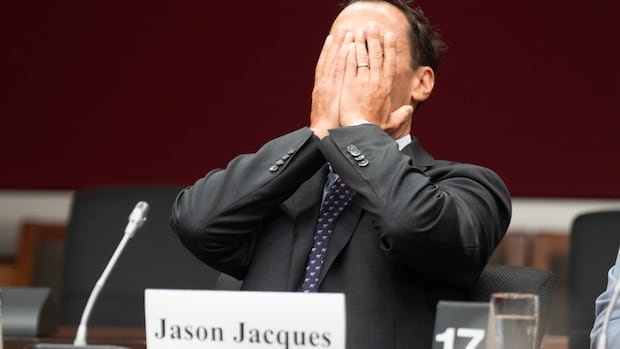

This year will witness significant developments for Canada’s fiscal watchdog as Interim Parliamentary Budget Officer Jason Jacques prepares to either step down or secure a permanent position. Additionally, the Organization for Economic Co-operation and Development (OECD) is set to release its evaluation of the office in the coming months.
Although the detailed OECD report is still pending, Jon Blondal, who oversees the OECD’s public management and budgeting division, has expressed positive feedback based on ongoing discussions. He emphasized the widespread esteem that the PBO commands across various stakeholders in Canada.
While the OECD focuses on assessing the PBO’s office as a whole rather than any specific individual, Canadian economists are also scrutinizing its operations. Despite the office’s solid reputation, experts suggest room for enhancement, advocating for a more data-driven approach and increased utilization of peer reviews for reports.
These proposed changes aim to bolster the office’s perceived objectivity and capacity to identify potential inaccuracies in a politically charged environment. Trevor Tombe, from the University of Calgary’s school of public policy, highlighted the inherent scope for disagreements in analyzing complex policies and stressed the importance of rigorous analysis.
The call for reduced commentary stems from Jacques’s contentious remarks before a parliamentary committee, where he used strong language to describe Canada’s federal finances. Former PBO Kevin Page criticized Jacques for straying from a neutral stance and emphasized the importance of factual reporting without additional commentary.
Various experts hold differing views on the sustainability of Canada’s finances, with some highlighting potential risks posed by unexpected shocks. They stress the need for objective analysis based on facts rather than subjective commentary to drive policy decisions.
The forthcoming OECD review will assess the PBO against key principles, including external evaluation practices. Suggestions for enhanced peer review processes arise from past discrepancies in the PBO’s analysis of the carbon tax, prompting calls for a more comprehensive and balanced approach in future reports.
Despite past controversies, Jacques remains committed to improving the PBO’s practices, drawing inspiration from the U.S. Congressional Budget Office’s focus on institutional credibility and data-driven analysis. The upcoming OECD report is expected to shed light on the PBO’s adherence to peer review standards, shaping the future trajectory of the office’s operations.