
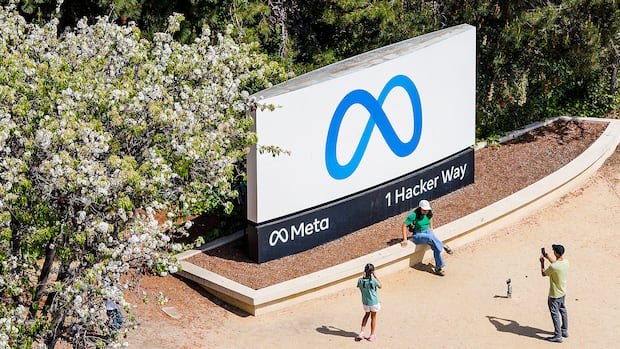

Meta Platforms CEO Mark Zuckerberg has advocated for reduced barriers on open-source AI in the United States to enhance competition with Chinese counterparts. The social media company unveiled a new, smaller, and customizable AI model named Muse Glimmer, tailored for tasks on a Mac or PC with a single graphics card. Zuckerberg hinted at the imminent release of larger AI models in the future.
In a 14-page essay, Zuckerberg stressed the importance of democratizing AI rather than concentrating power in a few entities, citing concerns about the dangers of extreme power concentration. This move aligns with the rising support for open-weight AI, driven by escalating AI costs and recent cybersecurity incidents involving models from Anthropic, OpenAI, and Meta.
Open-weight models, which disclose their core components for user customization, contrast closed models that companies retain control over, offering cost-effective solutions. Recent events spotlighted Chinese open-weight models like Kimi K3 and highlighted the necessity for adaptable AI systems for cybersecurity purposes.
Major industry players, including Meta, Nvidia, Microsoft, and Palantir, endorsed open-weight AI through a joint letter, underscoring the global traction for this model. Chinese startups have dominated the open-weight AI market, with models like Kimi K3, Qwen3.8-Max, and V4-Flash challenging top U.S. systems. Meta’s stock rose nearly 3% in premarket trading following the announcement.
Meta’s upcoming release, Muse Spark 1.2, developed by a specialized team, signifies the company’s strategic shift towards open models. Zuckerberg disclosed plans to allocate $1 billion to support communities impacted by the company’s data-center expansion, addressing concerns about infrastructure development obstacles in the U.S.
Zuckerberg emphasized the need for revised policies to propel U.S. firms in open-weight models, emphasizing data use and distillation methods. Meta intends to establish a governance structure empowering independent directors to approve model release safety criteria.
Despite the U.S. administration’s reluctance to subject open-weight AI to voluntary safety tests, Zuckerberg emphasized the importance of reducing obstacles for American open-source models to lead globally. The article underscores the ongoing evolution and competition in the AI landscape, driven by the quest for innovation and accessibility.