

Manitoba’s administration aims to transform the province into a “fully bilingual” region, though the exact details of this endeavor are still under development. The premier suggested that official bilingualism could be established through legislation, but some argue that the existing laws are sufficient and the emphasis should be on enhancing French service delivery.
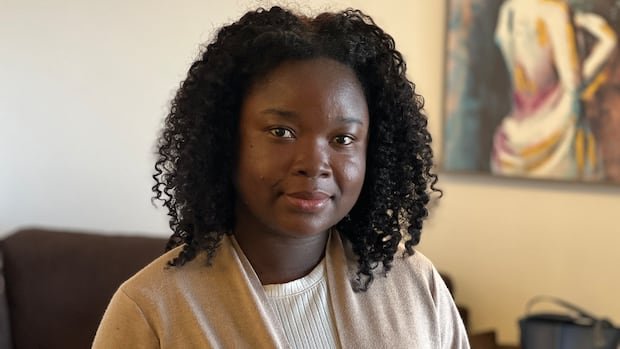
Raïssa Bado, a Winnipeg resident, expressed her anticipation for improved access to French services. Having relocated from Ivory Coast in 2009, she initially assumed that French, her mother tongue, would be adequate for basic services in Manitoba. However, obtaining services such as healthcare, car insurance, or daycare in French often involves delays and may only be accessible by appointment, if at all.
Bado highlighted the challenges of navigating between receiving services in English or waiting for them in French, noting the frustrations, constant need for translation, and potential misunderstandings that arise when opting for English services. She emphasized the importance of respecting both official languages in Canada and integrating them into the province.
Manitoba’s Francophone Affairs Minister, Glen Simard, has outlined the improvement of French public service access as a key objective in his mandate. In June, the provincial government initiated public consultations to explore ways to establish Manitoba as a “truly bilingual province.”
When asked about the envisioned model for bilingualism in Manitoba, Premier Wab Kinew mentioned that he envisions a legal recognition of bilingualism akin to New Brunswick. Unlike Manitoba, New Brunswick is constitutionally designated as an officially bilingual province, ensuring service delivery in both English and French by public institutions.
In contrast, Manitoba lacks the same level of legal protection for bilingualism in delivering public services, as highlighted by Guy Jourdain, a former executive director of the Association of French-Speaking Jurists of Manitoba. While the courts and legislature operate in both languages in Manitoba, the provision of government services in French is confined to designated areas based on the concentration of Francophones.
Jourdain suggested that aligning Manitoba’s bilingual status with New Brunswick’s model is feasible through legislative amendments. He emphasized the need to expand service delivery beyond historical Francophone regions to accommodate the growing French-speaking population in Manitoba.
Raymond Hébert, a political scientist, pointed out that existing legislation in Manitoba, such as the Francophone Community Enhancement and Support Act, already mandates the provision of public services in French. However, he noted that the effective implementation of these laws has been lacking, urging the government to prioritize enforcing existing legislation before pursuing additional designations.
Hébert cautioned against unnecessary legal routes to establish bilingualism, citing past contentious debates in Manitoba over language rights in the 1980s. He emphasized that political will and proactive enforcement of existing laws could pave the way for genuine bilingualism in Manitoba.
The province faces challenges in staffing bilingual professionals, especially in critical sectors like the judiciary, where the availability of French-speaking judges is limited. Minister Simard acknowledged the need for more bilingual staff and emphasized the government’s commitment to enhancing bilingual opportunities within the public sector.
The government plans to analyze feedback from the bilingualism consultations before finalizing a report in March, which will guide the collaborative efforts with communities to develop a comprehensive bilingualism plan. Simard stressed the importance of reevaluating how public services are delivered as the starting point for achieving genuine bilingualism in Manitoba.