
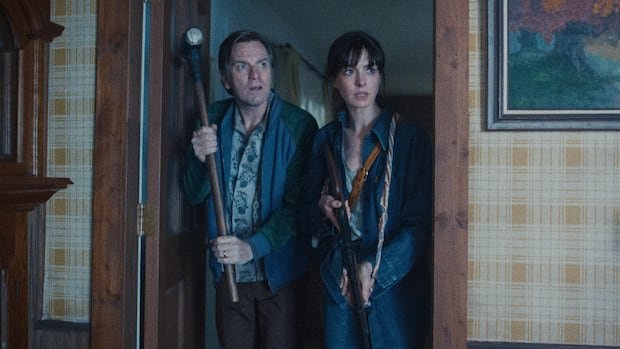

In 1982, housewives had numerous concerns to juggle. Whether it was managing teenage antics, dealing with a reluctant husband, or witnessing strange occurrences like blue lights, intense heat, and even a dinosaur tail in their backyard, life on Oak Street was anything but ordinary.
The world of Oak Street, as depicted in “The End of Oak Street” by director David Robert Mitchell and starring Anne Hathaway as Denise, offered a blend of Spielbergian charm and Stephen King-like suspense. The story followed the challenges faced by a typical American family, including the aloof yet caring father Greg (played by Ewan McGregor), the genius elder sister Audrey (portrayed by Maisy Stella), and the boy-next-door little brother Brian (enacted by Christian Convery).
Despite the film’s nostalgic 80s vibe and its attempt to capture the essence of classic Spielberg movies, “Oak Street” fell short of delivering a truly engaging narrative. While it promised a thrilling adventure with time-traveling dinosaurs, the execution lacked depth and failed to explore the characters’ potential story arcs fully.
As the plot unfolded, it became evident that the film prioritized spectacle over substance, leaving viewers yearning for more meaningful character development and thematic exploration. Despite its visual appeal and occasional moments of excitement, “The End of Oak Street” ultimately felt like a homage to Spielberg’s works rather than a fresh, innovative creation.
While some may argue that the film’s lack of a clear message is overshadowed by its entertainment value, others might find it lacking in originality compared to similar stories that have delved deeper into themes of survival and human nature.
In the end, “The End of Oak Street” left audiences divided, with some enjoying the ride for its nostalgic nods to the past while others felt it missed the mark in delivering a truly memorable and thought-provoking cinematic experience.