
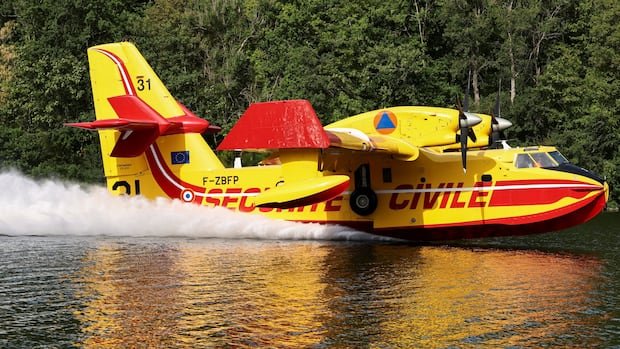

In the midst of an intense wildfire season in Canada, the United States, and Europe, there is mounting pressure on the manufacturer of the Canadair “Super Scooper” water bombers to boost production. Calgary-based De Havilland has taken the unusual step of restarting production of the Canadair after acquiring the program from Bombardier in 2015. The iconic aircraft, known for their hand-built craftsmanship in Calgary, are in high demand due to current shortages and aging fleets.
Originally developed in the 1960s for combating wildfires in the Canadian wilderness, the Canadair stands out for its ability to navigate narrow canyons at low altitudes and scoop up large volumes of water from lakes, rivers, and oceans swiftly. The latest iteration of the Super Scooper retains the signature features of past models, including a 30-meter wingspan, a 6,100-liter water tank, and the classic yellow and red exterior.
As political leaders in Canada and Europe express urgency in acquiring the Canadair aircraft to enhance firefighting capabilities, De Havilland faces increasing pressure to meet the demand. The company is contemplating the construction of a second production line to address the high interest in these water bombers. Currently, De Havilland is capable of producing around 10 aircraft annually, with plans to ramp up production to 20 per year with a second line.
Experts highlight the critical need for additional Canadair production lines to meet global demands driven by escalating wildfire incidents amid climate change. Failure to address this demand could potentially open the door for foreign competitors to develop rival firefighting aircraft, posing a threat to Canadian manufacturing jobs. The federal government is urged to consider establishing a national fleet of modern firefighting aircraft to bolster wildfire response capabilities across the country.
While aerial firefighting units like the Canadair play a vital role in wildfire mitigation efforts, they are just one component in a comprehensive strategy that includes ground crews, prevention, and mitigation measures. The federal government is committed to enhancing wildfire response capacity and collaborating with provincial and territorial authorities to address the challenges posed by increasingly severe wildfire seasons.