
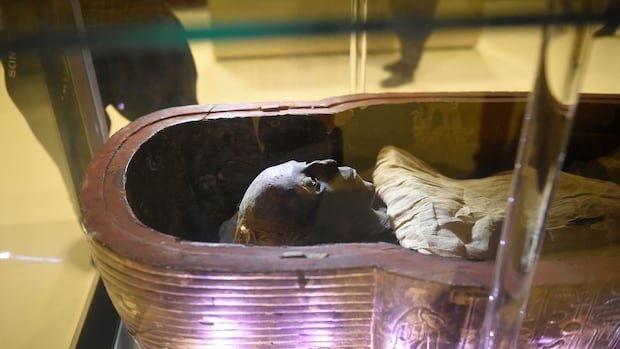

Despite its unusual nature, researchers have identified a global online market for preserved human remains, which they believe poses potential health risks. A study led by Kirsty Squires and her team at the University of Staffordshire in Stoke-on-Trent, England, analyzed 128 web posts from 2015 to 2025 showcasing or advertising remains from humans and animals for sale.
According to Squires, mummified heads, hands, and feet were frequently featured in these online posts. The researchers caution that mummified body parts may contain dormant microorganisms, including bacteria, fungi, and yeast, which could pose health hazards if not handled properly.
Guidelines for Safe Handling of Mummified Remains
Squires highlighted that many online images showed visible signs of deterioration of remains due to inadequate storage conditions. Unlike in museums where mummies are stored under controlled temperature and humidity, keeping remains in non-regulated environments, such as homes or garages, can lead to microbial release during handling.
When conducting research involving human remains, Squires emphasizes the importance of using protective equipment. She noted instances where sellers failed to use gloves while handling mummified body parts, potentially exposing individuals, especially those with compromised immune systems, to airborne microorganisms that could cause respiratory and skin issues.
The study also revealed that some mummified body parts might contain hazardous chemicals like arsenic and mercury from historical embalming practices. While the paper did not report specific cases of sickness from handling online-sold human remains, historical incidents, such as the deaths of conservation scientists in 1973 due to inhaling mould spores, underscore the potential risks associated with such activities.
Challenges in Regulating the Trade of Human Remains
Among the examined web posts, 11 originated from individuals in Canada. Shawn Graham, a digital archaeology professor at Carleton University, highlighted the lack of meaningful regulations surrounding the sale and purchase of human remains in Canada. While some shipping companies like Canada Post, Purolator, and UPS have restrictions on mailing human remains, sellers may bypass these rules by mislabeling packages.
Graham raised concerns about the ethical implications of trading in human remains, emphasizing the need for stricter laws to prohibit such transactions. He suggested that the online trade of mummified remains, often sourced from regions like Egypt and South America, reflects a form of cultural appropriation and commodification of human bodies.
Following the introduction of a bill in the U.K. to ban the online sale of human remains, Graham advocates for similar legislation in Canada to curb the trade of mummified remains. He believes that prohibiting the trade of human remains is essential to prevent the dehumanization of individuals and combat exploitative practices.