

A man from Squamish, British Columbia, was saved on Tuesday following an accident while BASE jumping off Slhanay Mountain. BASE jumping involves parachuting or wingsuit flying from a fixed structure or cliff, with the acronym representing building, antenna, span, and earth. Zachery Mayne made a 90-degree turn during his jump on November 11, hitting the mountain’s rock face. His parachute collapsed, causing him to start falling towards the ground until it caught onto some rocks. Mayne managed to reach a small area and free himself from the parachute to prevent being blown off the mountain.
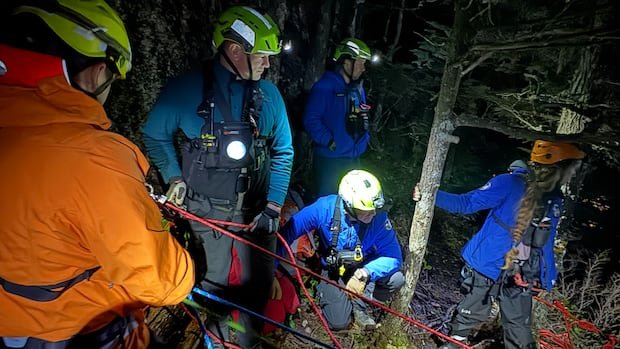
Mayne’s friends contacted authorities around 4:30 p.m. PT, leading 30 search and rescue personnel to his location, approximately 20 meters below a cliff on Slhanay Peak. Upon arrival, Squamish Search and Rescue found Mayne clinging to a small rock outcropping to avoid a potential fatal fall of over 450 meters. Mike Teske, the SAR manager, mentioned that it would have been an unsurvivable drop if Mayne had fallen.
After a challenging rescue operation that involved a significant hike through rough terrain, Squamish SAR enlisted the help of North Shore Rescue and Talon Helicopters to airlift Mayne out of the area. It was not until midnight that Mayne was successfully rescued. B.C. Emergency Health Services transported Mayne to the hospital in a serious but stable condition, with significant lower leg injuries reported.
Mayne expressed his appreciation to the rescue teams, his friends, and the Squamish community for their support during the ordeal. Mike Teske highlighted the importance of being cautious when engaging in outdoor activities in November due to the rapid onset of darkness and cold weather in mountainous regions.
Over the past five years, there have been 14 BASE jumping incidents in British Columbia, with most occurring in Squamish. B.C. AdventureSmart emphasized the need for individuals participating in high-risk outdoor activities like BASE jumping to plan ahead, prioritize safety, and respect the community and surrounding areas. Proper training, certified equipment, experienced companions, checking weather conditions, filing trip plans, and carrying communication devices are essential precautions recommended by AdventureSmart.