
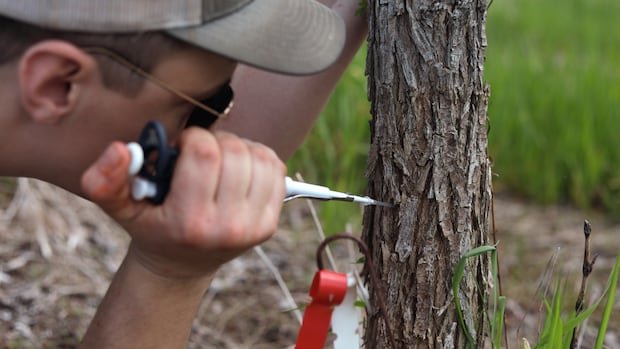

During the summer, researchers in Vermont intentionally spread Dutch elm disease to thousands of trees as part of an experiment. The goal is to develop a new generation of elms that are resistant to the fungus transmitted by bark beetles, which has been devastating elm populations in the U.S. and Canada for years. The aim is to eventually restore areas where elms once thrived, adorning city streets and riverbanks.
Gus Goodwin from The Nature Conservancy expressed the devastating impact of the loss of these trees over the years. Scientists hope that the Vermont experiment and similar efforts in Canada will lead to the development of elm strains that can resist Dutch elm disease, offering solutions as the disease spreads to new regions.
Alison Morrison from the University of Guelph arboretum highlighted the loss of the elms’ ability to mature, emphasizing the importance of breeding disease-resistant trees to combat the ongoing threat.
The Elm City that lost its elms
Fredericton, once known as the “City of Stately Elms,” saw a drastic decline in its elm tree population due to Dutch elm disease in the 1960s and 70s, leading to the loss of around 10,000 trees. Currently, only approximately 1,000 mature elms remain.
Professor Anthony Taylor from the University of New Brunswick shared his observation of a second wave of the disease affecting surviving elms on his property, underscoring the ongoing challenges faced in combating Dutch elm disease.
The disease, spread by bark beetles, attacks the tree’s vascular system, disrupting water flow and eventually causing the tree’s demise within a few years of infection.
To control the spread of Dutch elm disease, infected trees are promptly removed. However, past practices of removing nearby healthy elms may have unintentionally impacted the population’s tolerance to the disease.
A nightmare for elm-lined streets
In recent years, Dutch elm disease has emerged as a threat in new regions across Canada, affecting cities like Edmonton and Saskatoon. These cities have reported increasing cases of infected elms, prompting swift action to prevent further spread.
Efforts to combat the disease involve removing infected trees and implementing measures to prevent its spread, emphasizing the importance of community engagement in safeguarding urban forests.
The loss of mature elm trees not only affects the aesthetic appeal of cities but also hinders their environmental benefits, such as providing shade and aiding in stormwater management. Restoring elm populations could contribute to enhancing urban ecosystems and resilience to climate change impacts.
A test of time
Researchers in North America, including those involved in projects like the Elm Recovery Project in Guelph and Fredericton, have been working on breeding disease-resistant elms through crossbreeding and cloning. These long-term efforts aim to enhance the resilience of elm populations against Dutch elm disease.
The extensive breeding program requires time and patience, with the potential to produce disease-resistant elms that can coexist with Dutch elm disease, similar to European elms. The natural evolution of elms in Canada to combat the disease could take centuries, highlighting the importance of accelerating the process through scientific intervention.