
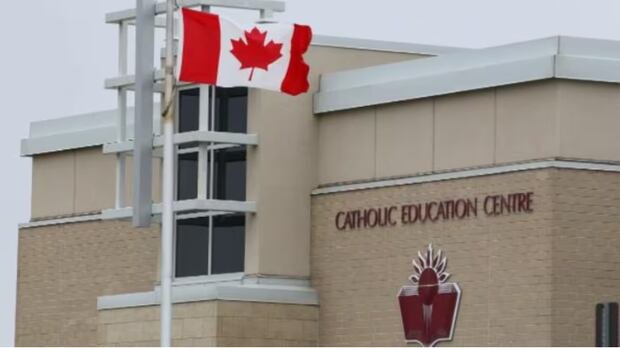

Facing a financial shortfall of $3.7 million, the London District Catholic School Board (LDCSB) has put forth proposals for budget reductions in the upcoming years. The 2025-2026 budget indicates plans to decrease the number of school bus monitors, cut computer expenses, reduce professional development opportunities for staff, and minimize sick leave costs. Preliminary figures for 2026-2027 highlight potential savings through measures such as eliminating transportation to select specialty programs, not replacing certain non-union staff during illness, discontinuing low-enrollment programs like French immersion at specific schools, trimming photocopying and supplies expenses, and reassessing special education services for cost efficiency.
The suggested cuts have raised concerns among teachers, with Charlotte Wells, president of the local Ontario English Catholic Teachers Association, expressing worry about the direct impact on classroom activities. Wells emphasized the detrimental effect on students due to reductions in essential resources and programs, attributing the situation to inadequate funding from the provincial government. She highlighted the adverse consequences of diminishing support for classroom supplies, student programs, and educational experiences, underscoring the challenges faced by teachers in mitigating these losses.
A more thorough discussion on the budget implications for the current and upcoming academic years is scheduled for December, following the finalization of enrollment figures. Despite requests for insights on the budget decisions and their repercussions, Gabe Pizzuti, the board of trustees chair, and other officials declined interviews, questioning the necessity of deliberating potential cuts prematurely.
Teachers argue that engaging in discussions about budget cuts is crucial as students will bear the brunt of these reductions. Wells stressed that continuous cuts and short-term measures only exacerbate the long-term damage inflicted on the education system, underscoring the limitations of relying on goodwill and sacrifices to sustain educational standards.
Presented during a budget committee meeting in mid-October, the proposals for program and service reductions aim to address the financial challenges faced by the LDCSB, as outlined by the board’s superintendent of business and corporate services. The finalized budget draft is expected to provide a clearer overview of the board’s fiscal constraints and will be presented in early December.
Notably, the LDCSB, recognized as the fastest-growing school board in Ontario, has experienced a surge in enrollment surpassing 28,000 students, necessitating the addition of numerous portables to accommodate the growth. Despite cost-saving measures such as reducing computer expenses and staff development, the board remains underfunded in critical areas like special education, pension plan contributions, and disability costs.
In response to the escalating financial pressures and calls for increased funding, the teachers’ union advocates for greater investment in education to mitigate the adverse impacts of ongoing budget cuts. Wells reiterated the urgency of addressing the funding disparities to safeguard the quality of education and ensure a sustainable future for students and educators alike.