
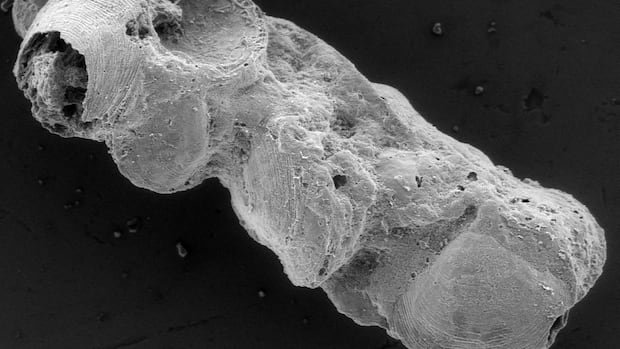

Long before the existence of dinosaurs on Earth, a surge in biodiversity led to the emergence of ancient ancestors to today’s animals, accompanied by an increase in feces. A recent study, not commonly discussed in paleontology, has highlighted the significance of analyzing coprolites, or fossilized feces, in gaining insights into early Earth ecosystems, nutrient cycles, and current animal relationships.
The research, detailed in the journal Trends in Evolution & Ecology, focused on the examination of fecal fossils dating back to the Cambrian period, approximately 540 million years ago. By studying fecal records from primitive worms, invertebrates, and mollusk-like creatures, scientists uncovered that fecal matter played a vital role in enhancing the habitability of deep-water ecosystems and increasing nutrient availability during that era, long before the era of dinosaurs.
The study’s revelation that feces were abundant during the Cambrian period holds significant implications for understanding the origins of present-day ocean ecosystems. Julien Kimmig, one of the paper’s authors and the head of the paleontology division at the Karlsruhe Natural History Museum in Germany, emphasized the importance of recognizing the substantial role of fecal matter in sustaining both ancient and contemporary marine ecosystems.
Examining coprolites, which are fecal matter preserved and mineralized in rock, offers valuable insights into the dynamics of past ecosystems and sheds light on the interactions among different species. Through the analysis of hundreds of coprolites from various global deposits, including some collected by the researchers themselves, the study uncovered feces from burrowing worms, arthropods, brachiopods, and hyoliths resembling cone-shaped mussels.
Beyond providing clues about evolution and predator-prey relationships, studying coprolites aids in understanding Earth’s ecology and the transformative impact of the Cambrian Radiation, a period marked by the sudden appearance of modern animal groups in the fossil record. This knowledge can offer valuable insights into how past ecosystems adapted to environmental changes and inform predictions about future ecological shifts.
The exploration of coprolites in the context of the Cambrian period adds a new dimension to comprehending this pivotal era in Earth’s history. By tracing back the origins of modern oceanic life to the Cambrian Radiation, researchers can unravel the establishment of biodiversity as we recognize it today. The study’s findings underscore a marked increase in fecal matter during the Cambrian, compared to the preceding Ediacaran period.
While the focus in Cambrian research often centers on predator-prey dynamics, the study of waste products, nutrient cycles, and their influence on biological diversity offers a broader perspective on ecosystems. By delving into geological periods and ancient environments, researchers can draw parallels to contemporary and future ecosystems, aiding in the prediction of potential ecological changes.
For some paleontologists, coprolites have become a pivotal aspect of their research endeavors. Karen Chin, a paleontologist and professor at the University of Colorado, emphasizes the importance of coprolites in uncovering interactions among ancient organisms and shedding light on carbon cycles. Despite the challenges in studying coprolites, Chin believes they are an underexplored area that holds immense potential for unveiling the mysteries of the ancient world.
The study of coprolites opens up a realm of unexpected discoveries, providing insights into the dietary habits of ancient creatures and the intricate web of interactions within past ecosystems. By delving into coprolites, researchers aim to encourage a deeper interest in these often-overlooked fossils, offering a unique perspective on Earth’s evolutionary history and ecological transformations.