

The province’s challenge of the B.C. Supreme Court’s ruling on Cowichan Tribes land title is anticipated to have a significant impact as Indigenous leaders convene with Premier David Eby and cabinet members commencing Tuesday in Vancouver. This gathering marks the 10th B.C. Cabinet and First Nations Leaders’ Assembly, an annual event uniting provincial and First Nations representatives. This year, the focal point will be the recent court decision awarding Quw’utsun (Cowichan) Nation Aboriginal title to approximately 300 to 324 hectares of land in Richmond.
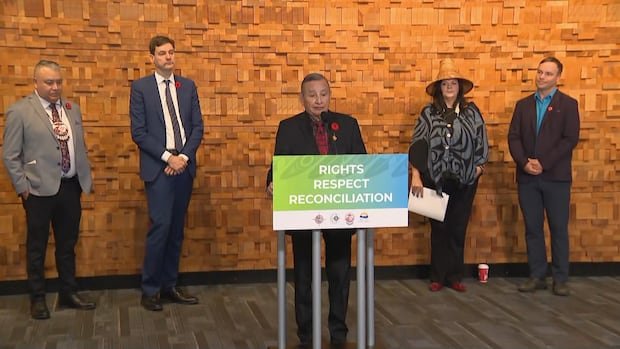
Grand Chief Stewart Phillip from the Union of British Columbia Indian Chiefs expressed the tension surrounding the meeting, emphasizing the gravity of the situation. Alongside leaders from the British Columbia Assembly of First Nations and First Nations Summit, Phillip, along with Eby, addressed the media about the ruling that invalidated Crown and city titles in a Richmond area, causing uncertainty among property owners.
The decision has raised concerns among homeowners and business proprietors, although the Cowichan maintain that their case was not directed at private landholders. Shana Thomas, the hereditary chief of Lyackson First Nation representing the First Nations Summit, underscored the importance of invigorating the B.C. treaty process and finalizing more agreements. Eby mentioned that the province is seeking a stay on the ruling to allow the Court of Appeal time to review it, emphasizing the need to reconcile historical injustices against Indigenous communities while respecting the property rights of current landowners.
The ongoing discussions aim to foster respectful dialogue and reconciliation, with Regional Chief Terry Teegee of the British Columbia Assembly of First Nations highlighting the participation of 204 First Nations communities seeking continued dialogue and action on B.C.’s Declaration on the Rights of Indigenous Peoples Act, established in 2019. The meetings scheduled for Tuesday and Wednesday present a crucial opportunity for leaders to clarify their positions and advocate for reconciliation and understanding.