
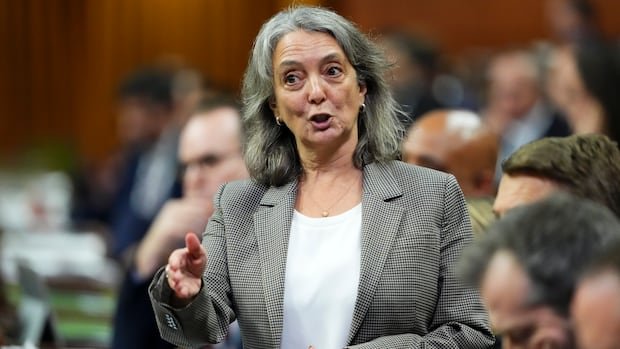

Environment and Climate Change Minister Julie Dabrusin has contradicted Steven Guilbeault’s assertions following his resignation from the cabinet over Ottawa’s agreement with Alberta. Guilbeault claimed that Canada is dismantling key aspects of its climate plan, but Dabrusin disagrees with this characterization. She emphasized during an interview on CBC’s “Rosemary Barton Live” that she does not view the memorandum of understanding (MOU) as a regression or a cancellation of programs.
The MOU outlines a potential pathway for a new oil and gas pipeline to British Columbia, a project long sought after by Alberta. It includes commitments from Ottawa to hold off on implementing its oil and gas emissions cap and to temporarily suspend clean electricity regulations in Alberta pending a new carbon pricing agreement. Guilbeault, who previously served as environment minister, expressed concerns about the importance of these policies in a statement announcing his resignation.
Dabrusin clarified that the language in the MOU regarding clean electricity regulations does not exempt Alberta. Instead, it allows for negotiations with provinces to demonstrate how they will achieve the regulations’ objectives in their unique ways. She emphasized that Alberta must meet the goals for an agreement to be reached by the April 1, 2026 deadline set in the MOU.
The agreement also calls for meaningful engagement with Indigenous Peoples in Alberta and British Columbia, with involvement from the B.C. government in consultations with B.C. First Nations. However, Maureen Nyce, the elected chief councillor of the Haisla Nation in B.C.’s North Coast, expressed skepticism about the pipeline project’s viability. She highlighted challenges such as undoing emissions caps and potential impacts on environmental protection laws, predicting significant resistance.
Regarding private sector involvement, the MOU aims to facilitate the construction and financing of one or more pipelines by private entities, with co-ownership by Indigenous groups and a route that enhances access to Asian markets. Paul Colborne, the president and CEO of Surge Energy, anticipates strong interest from multiple companies in bidding for this opportunity. He emphasized the importance of balancing energy production and emission targets, noting a shift towards attracting foreign investments.
Alberta Minister of Energy Brian Jean emphasized the need to secure a private sector proponent for the project, highlighting the agreement as a positive step towards collaborative nation-building. B.C. Minister of Energy and Climate Solutions Adrian Dix reiterated concerns about the pipeline project, emphasizing the importance of focusing on tangible economic projects in the region.
Overall, the MOU’s implications on climate policies, energy projects, and Indigenous engagement continue to spark debate and raise questions about the future direction of Canada’s environmental initiatives and energy development efforts.