
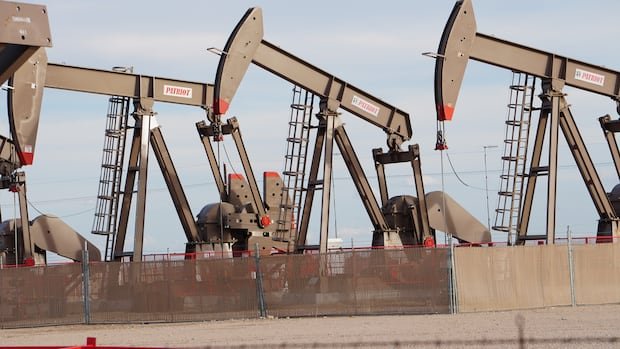

Canadian oil companies are set to unveil their financial results for the first quarter of the year, shedding light on how the surge in energy prices has impacted their earnings and outlining their strategies for managing the windfall profits. This period saw a fluctuation in oil prices, starting low in January and February before experiencing a significant increase in March. The spike in commodity prices was triggered by the U.S. conflict with Iran, resulting in the closure of the Strait of Hormuz and disrupting approximately 20% of the global oil and gas supply.
According to Fatih Birol, the head of the International Energy Agency, the situation in Iran marked the most significant energy crisis in history, causing widespread disruptions in commodities, fuel shortages, and escalating prices for consumers. Gasoline prices have surged across Canada, with regular gasoline selling at an average of $1.80 per liter and diesel exceeding $2.10 per liter, as reported by Kalibrate Canada.
At the beginning of the year, North American oil prices were trading around $55 US per barrel, but they have since soared above $110 US. This upward trend in oil prices has also been reflected in the stock prices of energy companies, with many nearing their 52-week highs.
As companies prepare to release their financial results, analysts anticipate potentially stronger returns in the second quarter, spanning from April to June, given the sustained high oil prices within the $90 US to $110 US range. Executives’ decisions on utilizing the surplus cash generated will be closely watched, with potential options including debt repayment, shareholder dividends, or increased oil production.
While some companies may consider modest spending increases, particularly in projects with marginal returns, large publicly traded firms are likely to prioritize maximizing shareholder returns over altering operational plans in response to short-term price fluctuations. The focus for oil producers in the coming months will involve monitoring commodity prices and evaluating the gradual ramp-up of investments.
A recent survey conducted by ATB Cormark Capital Markets revealed that 95% of Canadian oil and gas producers anticipate boosting production this year. Saturn Oil and Gas, based in Calgary, is among the companies planning to increase investments to enhance production in Western Canada. Chief executive John Jeffries highlighted the company’s proactive approach to securing contracts at favorable prices to mitigate potential price volatility.
Haliburton, a Houston-based oilfield services company, foresees heightened demand from small and mid-sized producers, signaling a positive outlook for oilfield services activity in response to the tightened oil and gas market conditions. Major U.S. oil firms like ExxonMobil and Chevron are also expanding their global exploration efforts outside the Middle East, eyeing new opportunities for oil production in regions such as Venezuela and Nigeria.
Overall, the industry anticipates robust investment and exploration activities in the coming years, with the top 30 international oil companies projected to generate $120 billion US in value from their exploration ventures, as indicated by a recent report from energy consultancy Wood Mackenzie. These developments underscore a shift towards diversification and expansion in the global oil production landscape.