
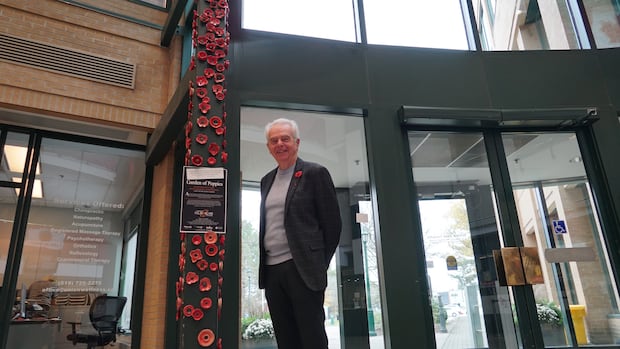

The originator of a community poppy initiative, which has showcased over a dozen artists nationwide, aims to foster ongoing dialogue and reflection about Remembrance Day throughout the year.
The Remembrance Every Day initiative invited artists to craft their own versions of poppies using clay. Each poppy is individually crafted and features a magnet on the back.
“I began making poppies for my children and grandchildren, partly to emphasize the enduring nature of remembrance and also due to my personal experiences with it,” John Short, the project’s founder, shared with CBC News.
Short expressed that he has a profound connection to Remembrance Day, which holds significant meaning for his family. His grandfather served in World War I, while his father lost his life in World War II.
“My grandfather was in the trenches from 1915 to 1918 and maintained a daily diary that narrates his experiences,” he recounted.
“Even more touching is the fact that my father entered the war in 1944 at the age of 20 as a navigator on Lancasters, and he was killed during his second mission.”
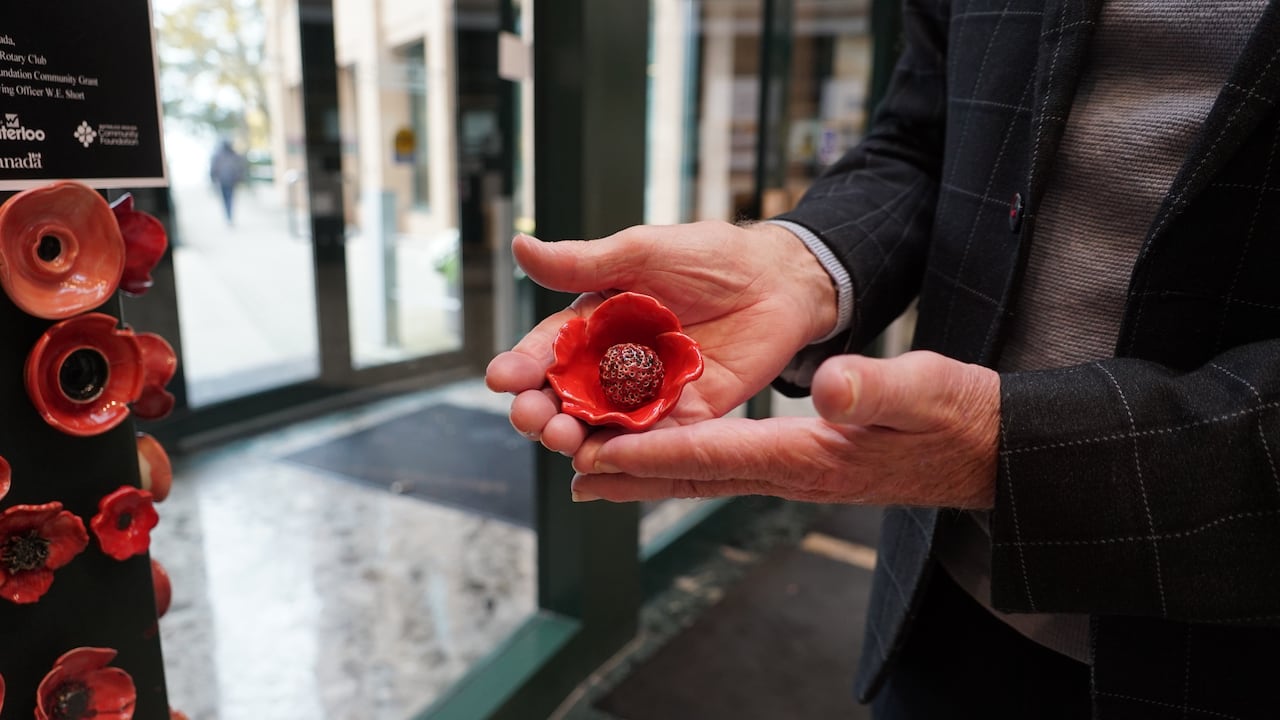
John Short displays one of the numerous clay poppies created by the Waterloo Potter’s Workshop for a poppy garden at Waterloo City Hall. (Carmen Groleau/CBC)
Short mentioned that he collaborated with the Canadian Clay and Glass Gallery in Waterloo to expand the project on a national level. An exhibition featuring the poppies will be on display at the gallery until December 11.
He also partnered with the Royal Canadian Legion extensively to permit artists to utilize the poppy symbol for the project, as it is trademarked.
According to Short, 22 artists participated in creating “poppy gardens,” which consist of hundreds of clay poppies. These gardens have been set up in various community locations across Canada, including areas in Ontario, Saskatchewan, Montreal, and British Columbia.
One such poppy garden is located at Waterloo City Hall, where members of the Waterloo Potter’s Workshop crafted over 500 clay poppies for the project.
Short stated that the public is invited to take a poppy and contribute online to support the Royal Canadian Legion.
“These poppy gardens serve to emphasize the necessity of honoring our veterans for the sacrifices they have made on our behalf,” Short remarked.

Over 500 clay poppies were created for the poppy garden at Waterloo City Hall. Community members are encouraged to take one and donate to the Royal Canadian Legion online. (Carmen Groleau/CBC)
In the lead-up to Remembrance Day, Short noted that he has had to continually restock the poppies.
He added that while the poppy garden serves as an artistic representation, he hopes that once individuals take a poppy home, they will remember Remembrance Day daily.
“Our goal is to cultivate greater respect and consideration for remembrance and its significance to us today, especially since all our veterans from the First and Second World Wars have passed away,” he stated.
Eekta Trienekens, the president of the Waterloo Potter’s Workshop, mentioned that members collaborated on the poppies throughout the summer. She explained that while most poppies were handcrafted, various techniques were also employed, including the use of the potter’s wheel and molds.
“We all came together for this significant project, which is wonderful. It’s a unique experience,” Trienekens told CBC News.
She expressed that the notion of individuals taking a poppy home enhances the project’s beauty.
“It will go home with various individuals who can appreciate it, and I believe this adds even more value compared to a permanent installation,” she remarked.
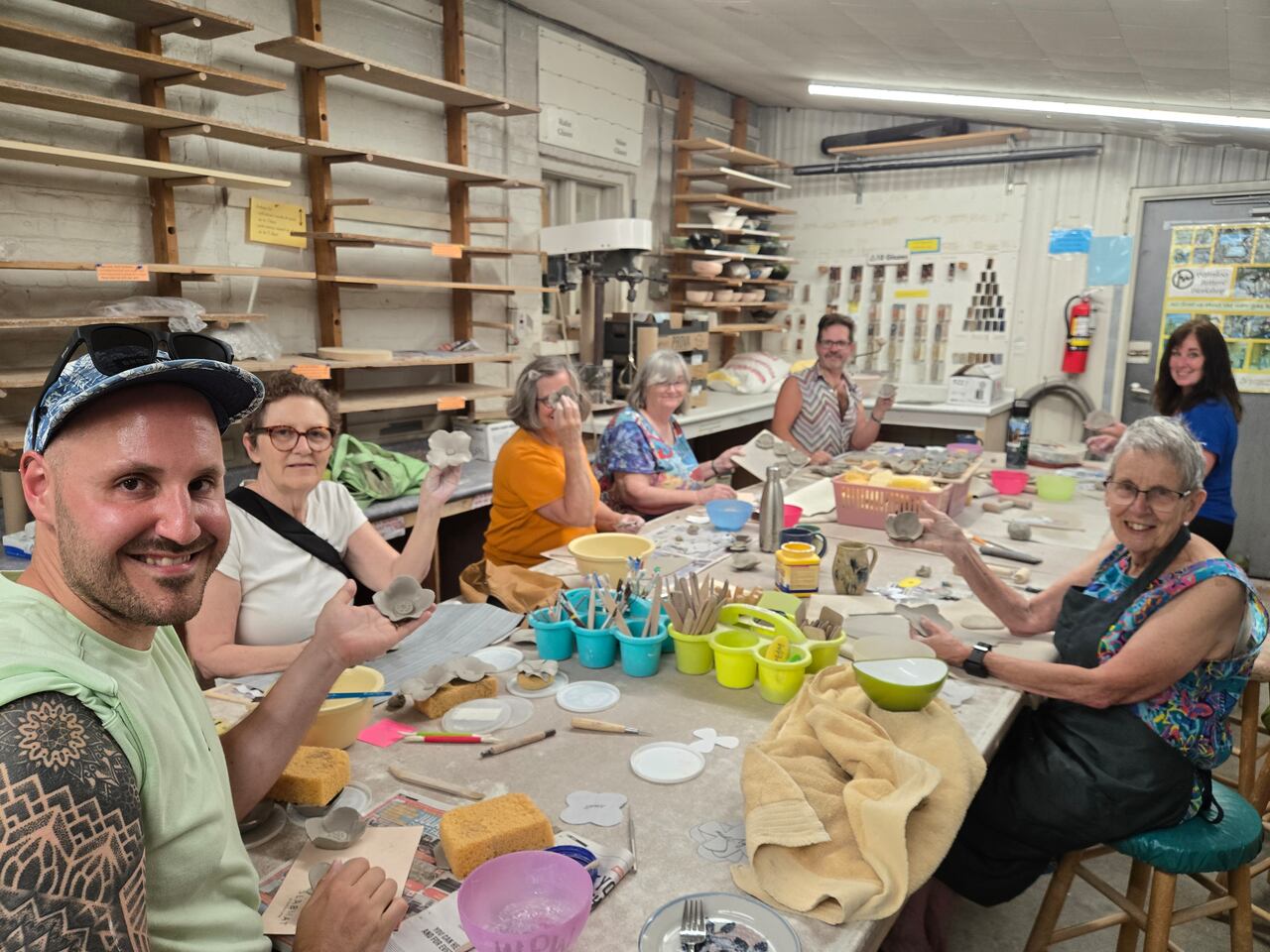
Members of the Waterloo Potter’s Workshop created over 500 clay poppies during the summer, now displayed at Waterloo City Hall. (Submitted by Eekta Trienekens)