
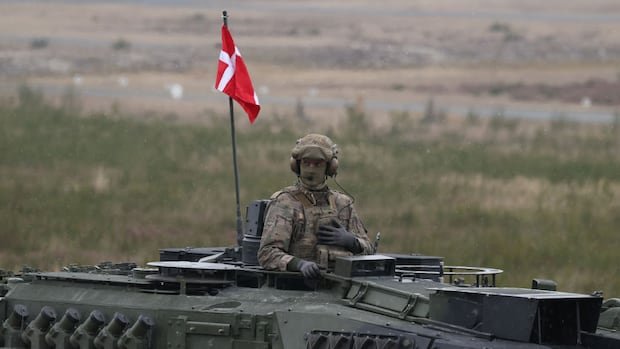

In military terms of deterrence, the current situation in Greenland is often likened to the concept of a “glass plate” or a “tripwire,” symbolizing the delicate balance between peace and conflict. Denmark recently announced its decision to enhance its military presence in Greenland by reinforcing its troops, navy, and air capabilities in coordination with NATO allies. The Danish Defence Ministry disclosed plans to deploy additional military assets for exercises aimed at safeguarding critical infrastructure and providing support to local authorities in Greenland, such as the police.
This military reinforcement, while seemingly a response to U.S. concerns on paper, carries a significant message directed more towards the U.S. than Russia or China. Unlike a formal NATO mission that necessitates approval from all 32 member nations, including the U.S., the Danish buildup in Greenland is not under the NATO umbrella. Nevertheless, some NATO allies like Germany and Sweden have indicated their readiness to contribute troops to augment the presence in Greenland.
While the possibility of Canadian participation in the planned military exercises remains uncertain, the political implications of joining the Danish initiative would be substantial. Analysts view this move as a strategic deterrence measure aimed at dissuading potential aggression, particularly from the U.S. amid ongoing tensions.
The recent diplomatic talks between Denmark and the U.S., involving high-level officials like Vice-President JD Vance and Secretary of State Marco Rubio, highlighted a fundamental disagreement over Greenland’s future. Denmark firmly rejected the Trump administration’s demand for full control of the island, emphasizing that any hostile action against Greenland would jeopardize the integrity of NATO.
The escalation in military posturing and geopolitical tensions underscores the fragile state of international alliances and the uncertainties surrounding U.S. commitments to its allies. The prospect of a confrontation between U.S. and Danish forces raises questions about the core principles of collective defense and mutual trust within NATO.
As the situation unfolds, experts emphasize the logistical challenges and complexities involved in any potential military action in Greenland, emphasizing the critical role of intelligence gathering in monitoring troop movements and strategic deployments. The presence of Danish and allied forces serves as a strategic deterrent, potentially influencing further actions and responses in the region.
In the midst of escalating geopolitical tensions and military maneuvers, the dynamics in Greenland continue to evolve, underscoring the intricate balance of power and alliances in the Arctic region.