
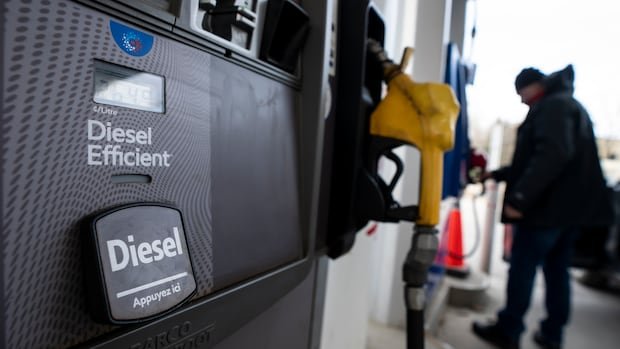

With the surge in diesel prices driven by global conflicts, the cost of refueling trucks transporting goods across Canada has escalated significantly, experts warn. Tej Dulat, from the Canadian Truck Operators Association, highlighted the substantial impact on trucking companies, where fuel expenses represent a major operational cost. Following the spike in prices since the Russia-Ukraine conflict in 2022, the industry now faces even higher costs, prompting companies to pass these expenses on to consumers, potentially affecting grocery prices.
As of the latest data, diesel prices in Canada reached $2.62 per litre, surpassing previous highs and exceeding last year’s rates by over a dollar. Particularly in Vancouver, prices soared to $2.92 per litre. In the U.S., diesel prices hit a record high of over $6 per gallon, creating ripple effects nationwide.
While recent attention has focused on the impact of tariffs on Canadian goods, the surge in oil prices due to geopolitical tensions is currently exerting a more significant influence. Industries reliant on diesel, such as agriculture in Alberta, are grappling with increased costs, affecting their profitability.
Bank of Canada governor Tiff Macklem acknowledged the potential economic challenges posed by tariffs but emphasized the ongoing conflicts, notably the U.S.-Israel war with Iran, as the key driver behind elevated gas prices and potential spillover effects leading to persistent inflation.
Experts note a critical shortage of diesel globally, with reduced exports from regions like the Persian Gulf. Moreover, geopolitical disruptions, such as Russia’s ban on diesel exports and refinery shutdowns like Canada’s Irving Refinery, are further constraining supplies. The federal government’s decision to extend the suspension of the fuel excise tax aims to alleviate some pressure, but industry experts believe more comprehensive solutions are needed to address the escalating costs effectively.
Looking ahead, energy analyst Dan McTeague warns of anticipated winter price hikes, posing challenges for various sectors and consumers. The impact of rising diesel prices extends throughout the food supply chain, potentially leading to increased costs for transportation, storage, and production. The convergence of multiple factors, including extreme weather events affecting harvests, suggests a prolonged period of elevated food prices, raising concerns about affordability for low-income Canadians in the foreseeable future.