
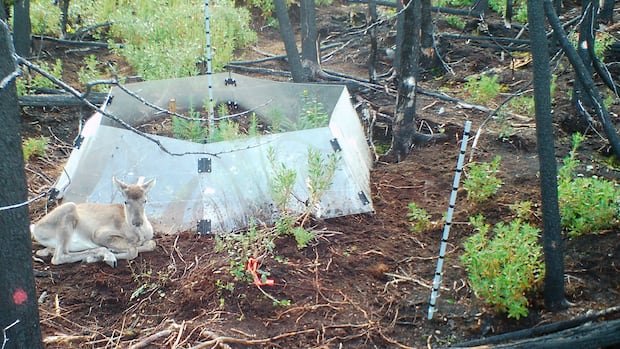


Lucas Brehaut anticipated significant interest in his research, but the wildlife in Newfoundland’s wilderness had other plans for his equipment.
Brehaut, a scientist at the Canadian Forest Service focusing on wildfire research, is investigating the post-fire regeneration of forests in Atlantic Canada, where wildfires are becoming more frequent despite the region’s cooler and wetter climate.
Following a forest fire near Grand Falls-Windsor, N.L., in 2022, he embarked on a study to comprehend forest regeneration under the influence of rising temperatures due to climate change.
For this purpose, Brehaut and his team transported 19 open-top chambers (OTCs) through the forest to place them around newly planted seedlings. These OTCs act as small greenhouses, raising temperatures by one to three degrees to simulate global warming effects. The study is currently in its third year out of a planned five.
-
The only known woolly dog pelt has returned to Canada. It’s a ‘powerful moment’ for Indigenous communities
-
These tiny endangered raccoons make their own toys out of trash
Despite expecting challenges such as long treks in harsh terrain and Newfoundland’s unpredictable weather, Brehaut encountered an unexpected issue during a routine check-up in September 2023.
“That’s when we started to notice that some of these greenhouses had some visitors, and might not have been as strong as I had hoped,” Brehaut commented.
These “visitors” included caribou, moose, black bears, wolves, rabbits, and owls. Brehaut identified the intruders through cameras initially set up to monitor snow depths during winter.
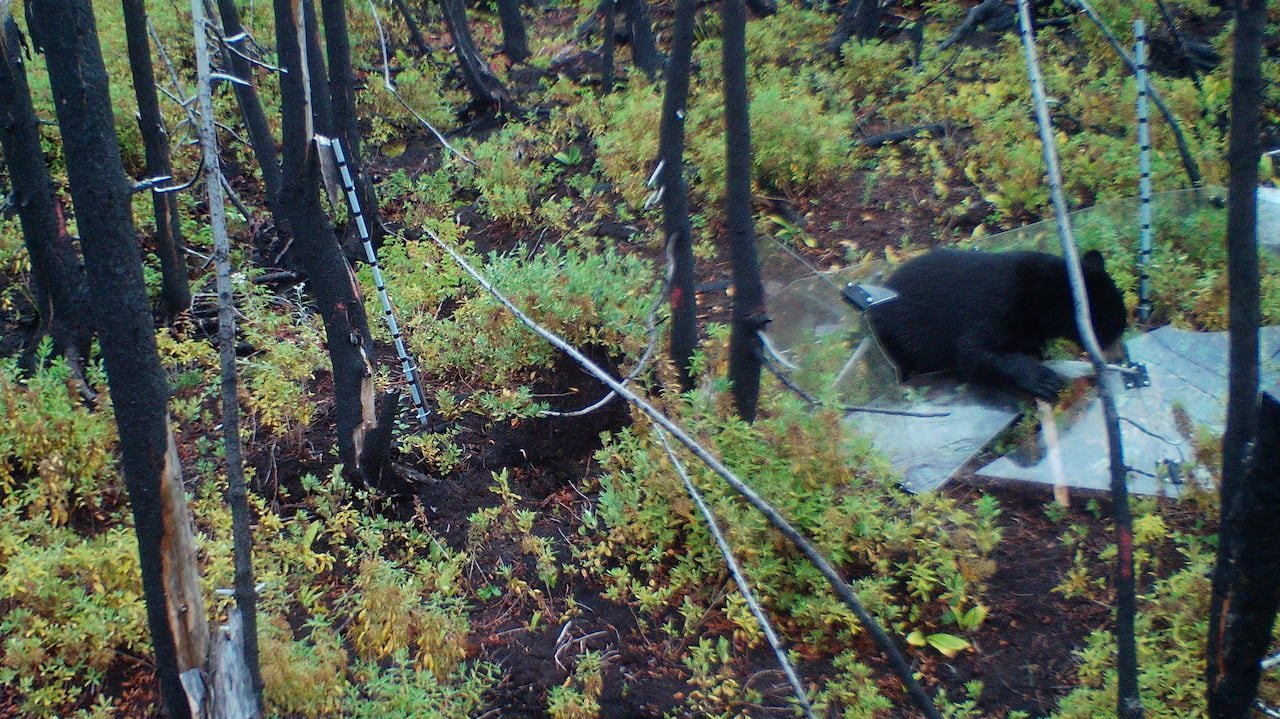
Out of the 19 sites,