
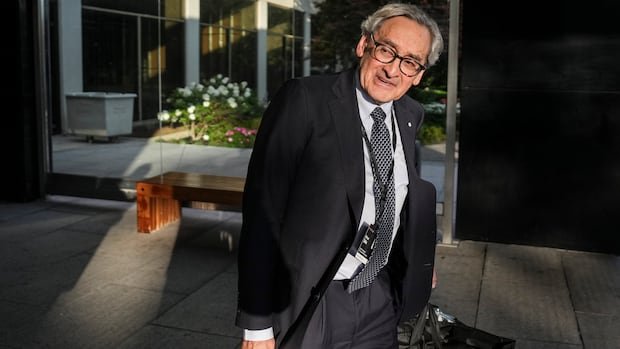

Privy Council Clerk Michael Sabia, responsible for overseeing Prime Minister Mark Carney’s ethical conduct in relation to personal financial interests, emphasized the activation of the ethics screen at the slightest indication of necessity. Testifying before the House ethics committee in Ottawa, Sabia addressed concerns raised by Conservative MPs regarding potential financial gains from Carney’s policy decisions.
Earlier this year, an ethics screen was implemented following Carney’s full disclosure of assets to the federal ethics commissioner. Most of Carney’s assets, excluding select assets like cash, his primary residence, and cottage, were transferred to a blind trust after his election as Liberal leader.
A blind trust operates with a trustee managing assets independently, without input from Carney, ensuring transparency and preventing potential conflicts of interest. The ethics screen, encompassing over 100 companies in which Carney had stakes, prohibits his involvement in decisions that could favor these entities during his tenure as prime minister.
Sabia revealed that the ethics screen had been invoked on 13 occasions, leading to Carney’s exclusion from decision-making in six instances after thorough review by the ethics commissioner. The cases where the screen was not applicable involved decisions unrelated to the disclosed assets or general tax measures.
Carney, with an extensive financial background including roles at Brookfield Asset Management, the Bank of Canada, and the Bank of England, complied with regulations mandating the divestment of controlled assets by public office holders. The opposition has raised concerns about the adequacy of existing laws in ensuring ethical governance.
During the committee hearing, Sabia defended the current rigorous system but acknowledged the possibility of legislative updates. He cautioned against overly stringent measures that could deter talented individuals from transitioning from the private sector to public service.
Administered by Sabia and Marc-André Blanchard, Carney’s chief of staff, the ethics screen focuses on matters involving companies like Brookfield and Stripe, where Carney held assets. The specifics of Carney’s financial holdings in these companies were not disclosed, but Brookfield’s 10-K report indicated substantial unexercised stock options held by Carney.
The ongoing scrutiny underscores the commitment to ethical governance and financial transparency within the Canadian political landscape.