
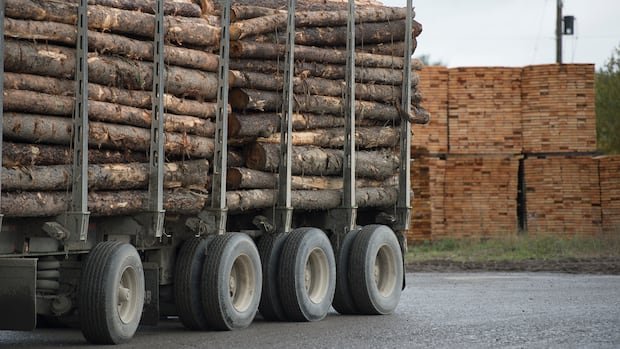

The shutdown of a sawmill in Ear Falls, Ontario has sparked calls for federal government intervention. Mayor Kevin Kahoot revealed the closure on Friday, seeking provincial assistance to explore all available avenues. The sawmill, operated by Interfor, is a significant employer in the small township of northwestern Ontario, impacting around 150 jobs due to challenges like U.S. tariffs and a stagnant market. The Ontario Forest Industries Association reports a total softwood lumber tariff of nearly 45% following recent additional tariffs.
Ian Dunn, OFIA’s president and CEO, noted the ongoing changes in Ontario’s pulp and paper sector affecting the sawmilling industry, emphasizing the need for urgent action amidst the shutdown. Despite efforts to boost the domestic market, with the majority of Ontario’s forest exports going to the U.S., complete market replacement remains unlikely.
In response to industry struggles, Prime Minister Mark Carney announced a stabilization package in August, including funds and loan guarantees. However, industry leaders like Dunn stress the immediate necessity of implementing these measures. Meanwhile, diversification and meeting housing demands are crucial, as seen with the reopening of the Kapuskasing paper mill in the northeast with government aid.
Rick Dumas, president of NOMA, highlighted the importance of industry diversification to avoid setbacks in single-industry towns. Amidst abundant raw materials, he questioned the disconnect between the lumber industry and housing demands. Governments and industry need to collaborate to explore product diversification and address market needs.
OFIA praised Ontario’s advanced wood construction plan as a positive step towards industry growth. However, the region also requires a focus on skilled labor development to support industry sustainability and youth opportunities. Dumas emphasized the need for competitive business models and youth engagement in forestry and mining sectors for regional economic stability.