
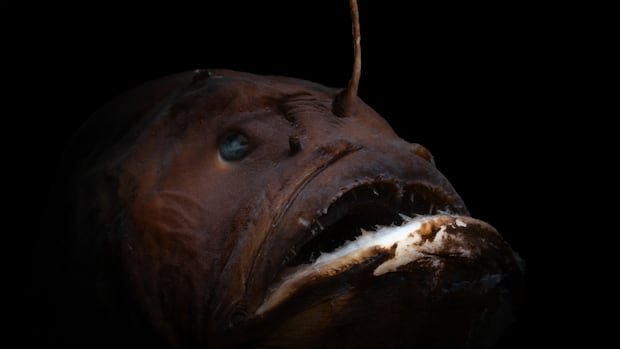

A recent study suggests that female anglerfish may use their distinctive forehead lure not only to attract prey but also as a signal for potential mates. Biologist Alex Maile, the lead author of the research, describes these deep-sea creatures as a mix of beauty and terror.
Published in the journal Ichthyology and Herpetology, the study analyzed DNA from over 100 preserved anglerfish species to explore how different types of lures may have evolved to enhance reproductive success. Marine biologist Milton Love, while not part of the study, finds the theory of a dual-purpose lure intriguing and innovative.
Anglerfish are a diverse group, with hundreds of species found in various oceans and environments. The females possess lures, which are modified dorsal fin spines acting as bait. These lures come in different shapes and functionalities, from emitting chemicals to glowing with bioluminescence.
Maile, along with colleague Matthew Davis, conducted a comprehensive analysis of anglerfish lures’ evolution, connecting designs to habitats and behaviors using fossil evidence and computer modeling. The researchers discovered that the first anglerfish lure evolved around 72 million years ago, with bioluminescent lures appearing 23 to 34 million years ago, leading to a surge in anglerfish diversity.
Male anglerfish, significantly smaller than females, rely on bioluminescent cues and chemical pheromones to locate mates in the dark depths. Once mature, males cease feeding and prioritize finding a female for reproduction.
Notably, bioluminescence is a common mating strategy among deep-sea species, with lanternfish and dragonfish also using light to attract mates. In some cases, males have evolved larger eyes to better spot glowing females.
Despite the male anglerfish’s fate of fusing with the female after mating, scientists like Love view it as a natural part of their reproductive cycle. To them, it symbolizes the male’s fulfillment of its reproductive purpose in life.
In conclusion, the study sheds light on the fascinating evolution and mating behaviors of anglerfish, showcasing the intricate adaptations these deep-sea creatures have developed over millions of years.