
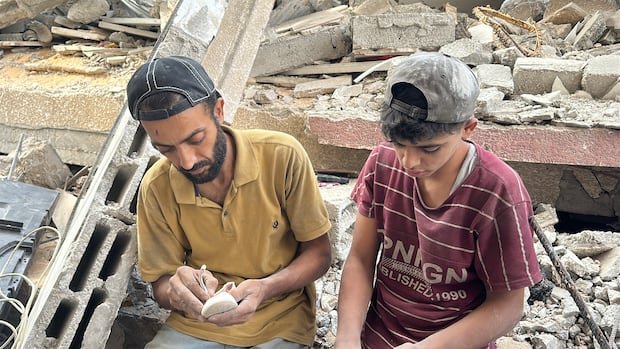

In the early hours of the morning, Mu’ayyad Ajjour and his neighbor Mohamed Zaida commenced their daily search efforts in Gaza City. Following the ceasefire agreement between Israel and Hamas in October, the duo has been scouring the debris of a building where Ajjour’s five-year-old cousin, Masa, was last seen with her family.
Ajjour, aged 37, fastened ropes to a black mixing dish while 17-year-old Zaida descended into a deep crevice he had excavated within the rubble. Utilizing makeshift pulley equipment, they established a systematic process: Zaida would haul the dish along the tunnel, fill it with debris, and signal Ajjour to retrieve and sift through it using a fan cover.
Within the eerie silence, the building, a casualty of an airstrike in March 2024, loomed precariously above Zaida as he toiled in his unstable tunnel propped up by concrete blocks. Undeterred by the imminent danger, he persisted in his quest to uncover any trace of the child’s remains.
Masa’s tragic fate is emblematic of the thousands presumably entombed beneath the ruins scattered across Gaza post the prolonged conflict. As the delicate truce prevails, families are mobilizing search efforts with scant resources to locate and accord proper burials to their loved ones.
A pivotal moment arrived on a Saturday morning when searchers frantically contacted Masa’s mother and grandfathers, disclosing the discovery of a skull and clothing matching the girl’s description. The remains, including a skull adorned with tufts of hair, a ruby earring, and a torn pink sweater, were tenderly wrapped in a white blanket.
Karim Al-Suwaireki, Masa’s maternal grandfather, expressed relief upon identifying her remains, deeming the find a miraculous closure. Ajjour, a participant in the search mission, likened the emotional impact to a moment of profound significance, as he exulted in finally locating the young girl and ensuring her a dignified burial.
In March 2024, Masa and her family sought refuge in a residential structure before becoming victims of a raid and subsequent bombardment, as recounted by the men to CBC’s freelance videographer Mohamed El Saife. Tragically, Masa, her father, and mother suffered grievous harm, with her father’s whereabouts remaining unknown while her mother recuperated from injuries at Al-Shifa Hospital, losing her unborn child in the process.
The arduous search for Masa’s remains has been marked by dogged determination, with Ajjour and Zaida laboring tirelessly from dawn till dusk, albeit hindered by the lack of adequate tools. The breakthrough discovery of Masa’s white shoe amidst the debris infused the search with renewed hope and purpose, as Ajjour underscored the unwavering commitment to persevere in the quest for closure.
Despite estimates by the United Nations indicating thousands of bodies still interred under Gaza’s rubble, humanitarian efforts to clear debris and restore essential services have commenced. The colossal task of rubble removal, necessitating heavy machinery and substantial labor, underscores the protracted nature of the recovery process.
As the day drew to a close, Zaida emerged from the tunnel alongside Ajjour, both physically drained yet resolute in their mission. Reflecting on the tragic circumstances surrounding Masa’s demise, Ajjour articulated a fervent desire to lay her to rest respectfully, underscoring the innocence of the young victim and the bittersweet closure brought by her recovery.
With Masa’s remains finally located, Ajjour’s thoughts turned to her missing father, vowing to persist in the search for closure. The solemn commitment to honor Masa’s memory and continue the quest for her father’s whereabouts encapsulates the enduring impact of conflict and the resilience of those affected by its aftermath.