
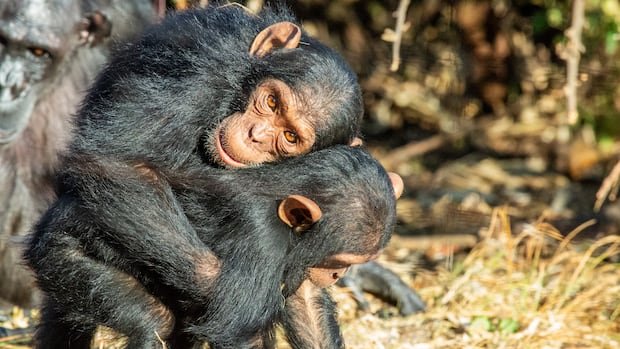

In a recent study published in the journal Proceedings of the Royal Society B: Biological Sciences, researchers discovered that great apes, including chimpanzees and bonobos, utilize physical affection such as hugs, kisses, pats, and even love bites to promote “social tolerance” and prevent unnecessary conflicts, particularly in anticipation of stressful events.
Lead author Jake Brooker, a psychologist and great apes researcher at Durham University in England, explained that these behaviors were observed not only after conflicts but also before potentially stressful situations, like encounters with outside groups or meal times. The study, conducted on semi-wild bonobos and chimpanzees in ape sanctuaries in the Democratic Republic of Congo and Zambia, revealed that by engaging in reassuring body contact before feeding times, the apes built trust and avoided food-related fights, ultimately allowing them to eat more peacefully and for longer durations.
Notably, the research highlighted that both chimpanzees and bonobos exhibit similar positive touch behaviors despite their differing reputations for aggression. While chimpanzees are often perceived as more aggressive than bonobos, the study found that both species use touch to enhance within-group tolerance. This suggests that ancestral apes may have utilized similar mechanisms to reduce social conflict.
Chimps were observed to engage in a broader range of affectionate behaviors, including higher-risk actions like gentle bites and mouth interactions, especially among males. This behavior indicates that more aggressive species may require greater reassurance to maintain social harmony.
Brooker emphasized that the findings offer a valuable lesson for humans, suggesting that positive physical contact among friends can enhance communication and bonding, a practice that may be overlooked in modern society.