
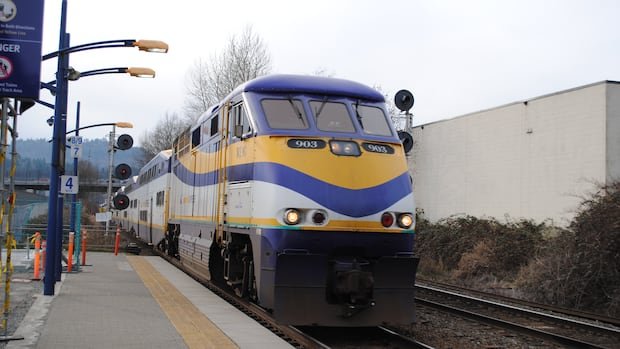

TransLink is commemorating three decades of the West Coast Express (WCE) with festivities at Waterfront Station, featuring live music, face painting stations, and the unique occurrence of weekend train operations in Metro Vancouver.
According to TransLink CEO Kevin Quinn, the West Coast Express plays a crucial role in regional transportation. The 69-kilometre route connecting downtown Vancouver and the Fraser Valley is the sole regional train service in Metro Vancouver, with stops in Waterfront, Port Moody, Coquitlam, Port Coquitlam, Pitt Meadows, Maple Ridge, and Mission.
Unlike other rapid transit services in Metro Vancouver, the West Coast Express primarily runs on weekdays, operating ten times a day – five westbound trips in the morning and five eastbound trips in the evening.
The limited service of the West Coast Express is attributed to various factors. TransLink does not own the rail line; instead, it pays Canadian Pacific Kansas City for track access, which poses challenges in expanding service frequency and directions without impacting freight operations to and from the Port of Vancouver.
Expanding West Coast Express service is not a current priority for TransLink due to slow post-pandemic recovery rates, different jurisdictional issues with B.C. Transit, and a focus on other transport projects like bus rapid transit, SkyTrain extensions, and more buses.
While the NDP promised to extend the West Coast Express to Chilliwack if re-elected, the provincial government’s current priorities lie in projects like SkyTrain extensions and highway upgrades, indicating a lower interest in expanding transit east from Metro Vancouver.
On the other hand, transit expansion northward shows promise, with municipalities from Squamish to Pemberton advocating for improved connectivity with Metro Vancouver. Progress in this direction seems to be gaining momentum, offering hope for enhanced transit services in these areas.
Overall, the future of the West Coast Express remains somewhat stable, catering to a specific group of commuters with a fixed schedule, while efforts to enhance regional transit connections continue to evolve positively in various directions.